Nine days on Jeju, seven of them walking, and the line never breaks. Each morning starts where the previous evening stopped, and by the end you have walked 108 kilometres of a 437-kilometre trail. There is one day with two small hills on it and no summit anywhere. Nobody walks with you.
What the word means
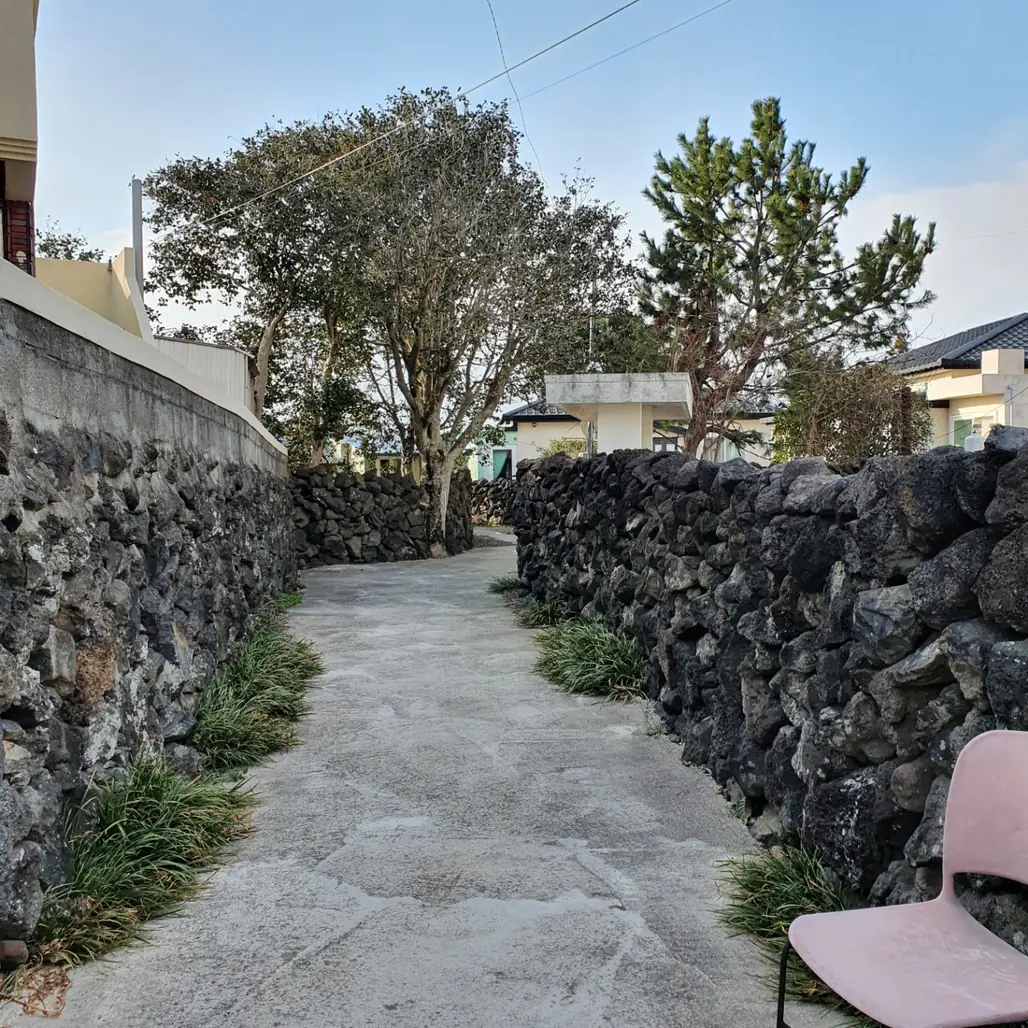
Olle is not a brand. In the Jeju language it is the narrow lane that runs from the main road to the gate of a house — the last stretch before you are home. The trail took that name rather than the name of a mountain or a coast, and it tells you what the walking is for.
The lazy pony
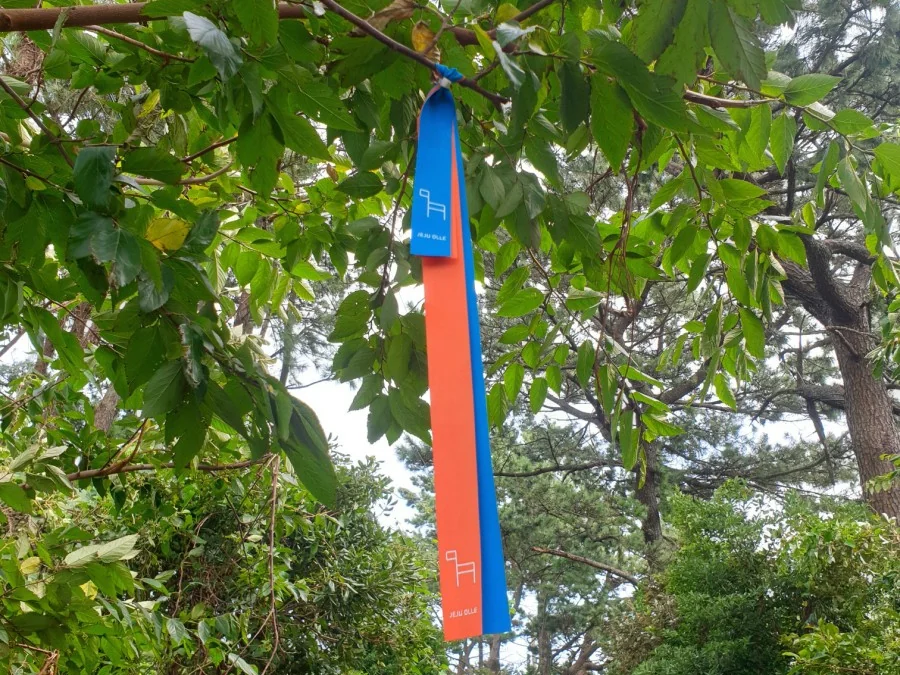
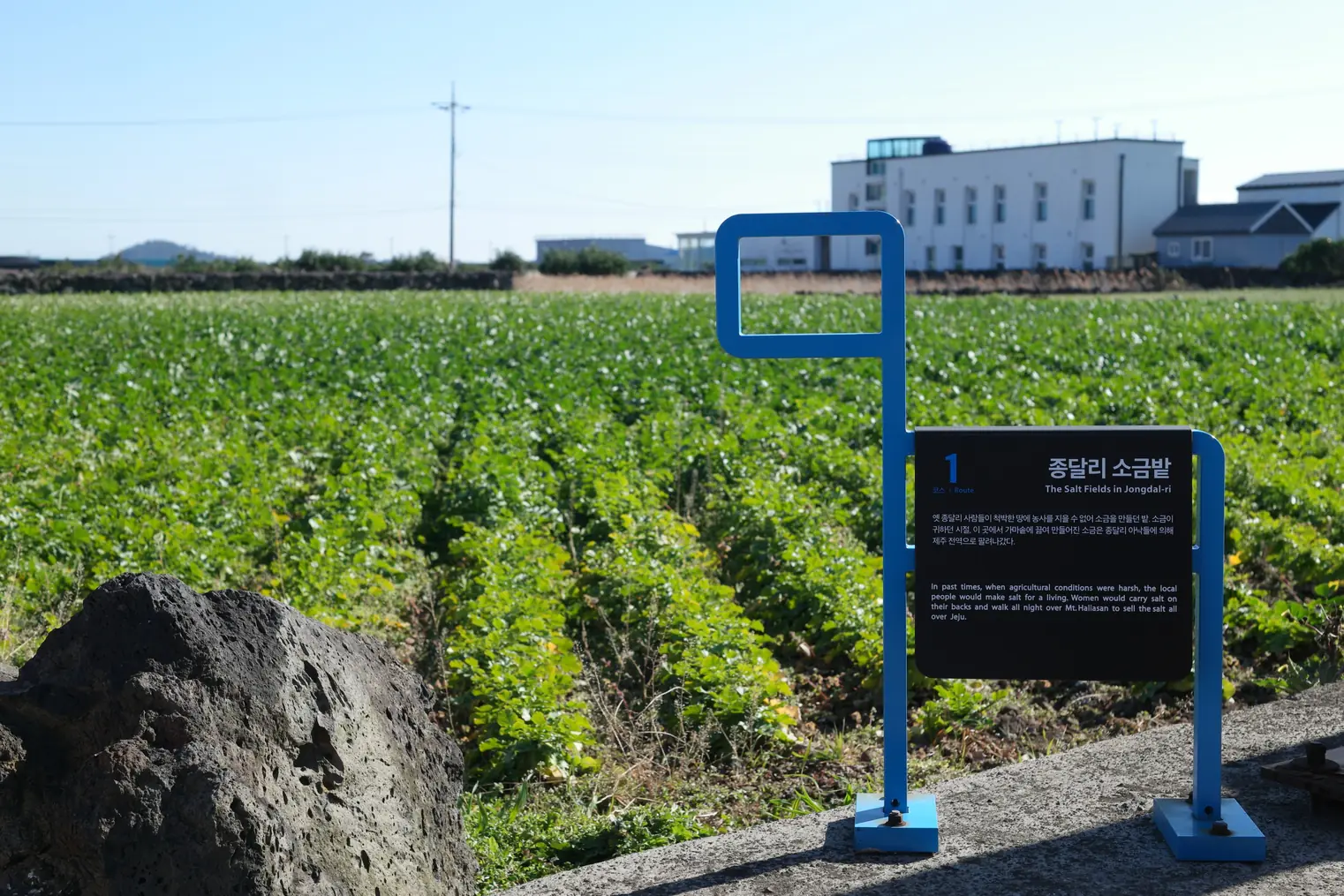
You navigate by ribbon. Blue for the sea and orange for the island's satsumas, tied to trees and utility poles, with wooden posts and a small blue pony where the way turns. The pony is called Ganse, from ganse-dari, the Jeju word for a slow idler. A trail that names its own symbol after laziness is telling you not to hurry, and after two days you stop.
One line, seven days
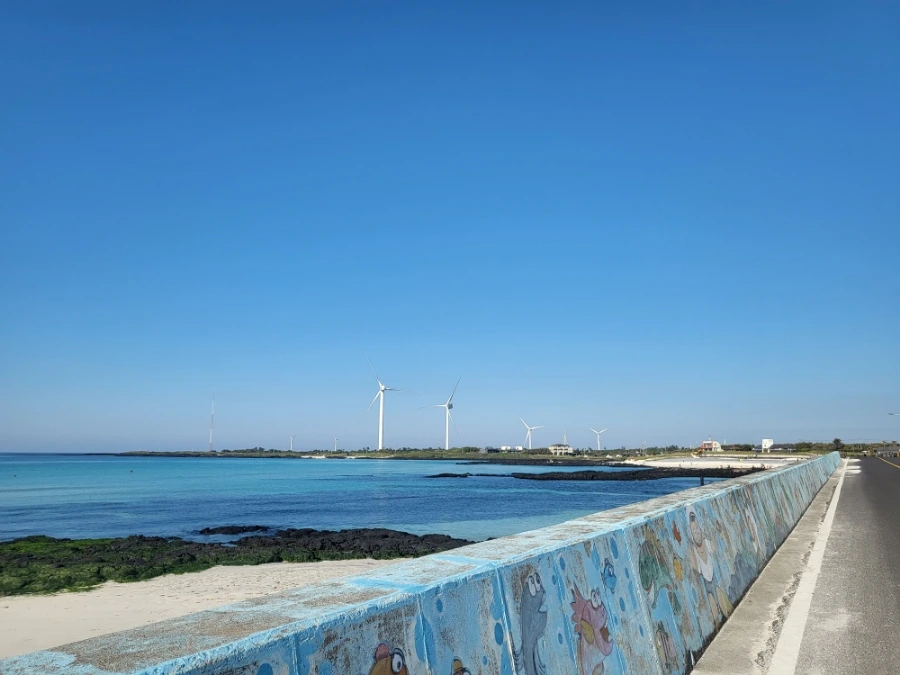
The route runs from a memorial hall in Jeju City eastward and then south: Jocheon, Gimnyeong, Hado, Jongdal, Seongsan, Onpyeong. Seventeen kilometres, then nineteen, then seventeen, then eleven. Your bags go to the next place while you walk, so what you carry is a day pack. The shortest day is deliberately the fourth of the seven, because by then your feet have an opinion.
Two small hills, and that is all
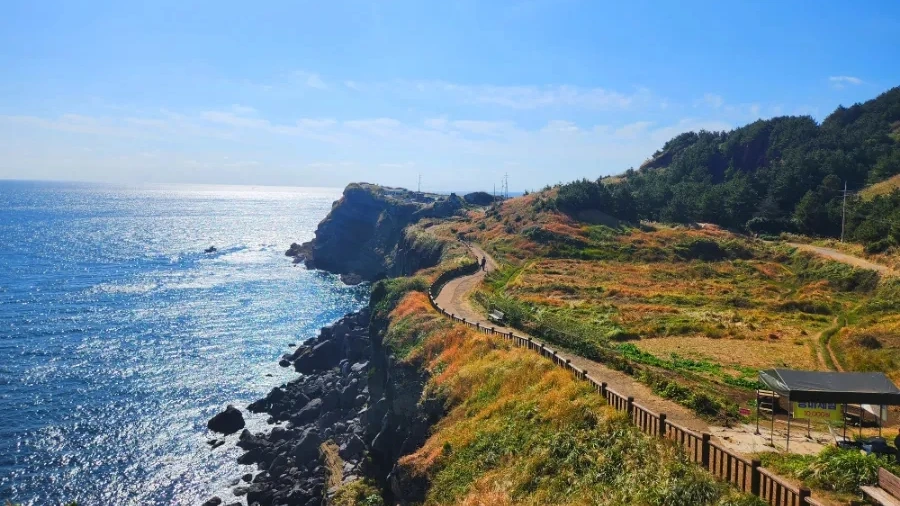
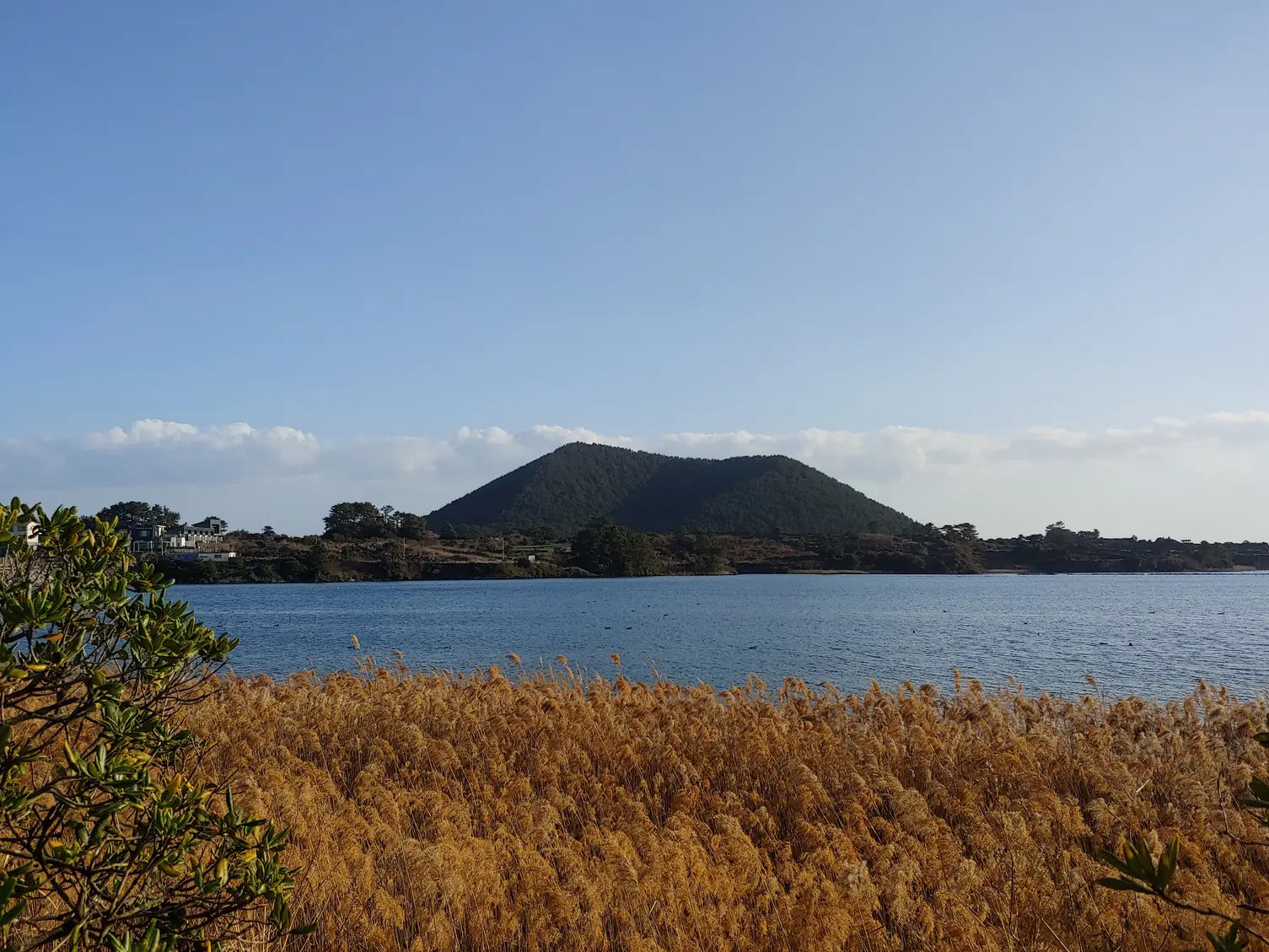
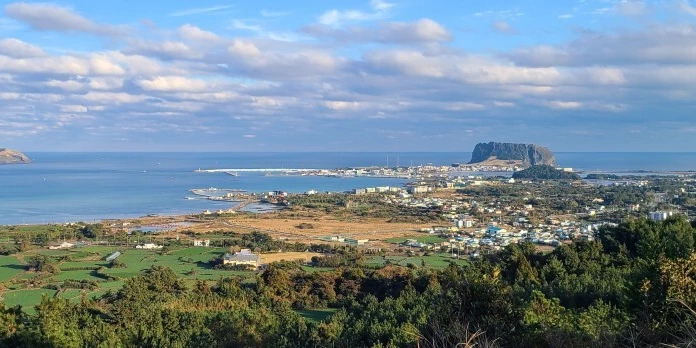
Day six crosses Malmi Oreum and Al Oreum, two low extinct cones behind Siheung. Neither takes half an hour, and from the top of the second one you get Seongsan Ilchulbong and U-do in a single frame. They are the only climbing on the trip. The Olle was laid along the coast; where it goes up, it goes up for the view rather than the achievement.
The day you end where you started
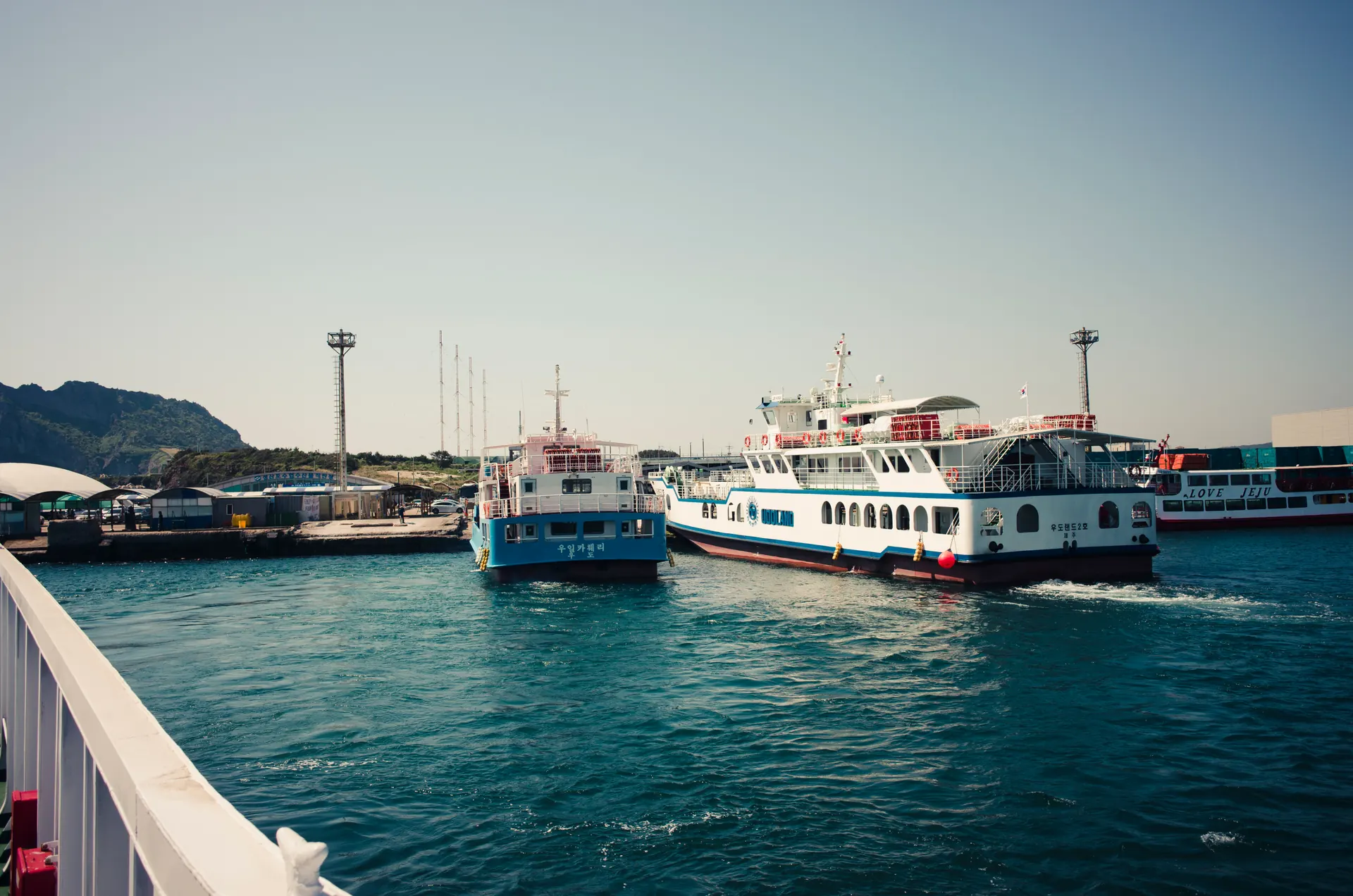
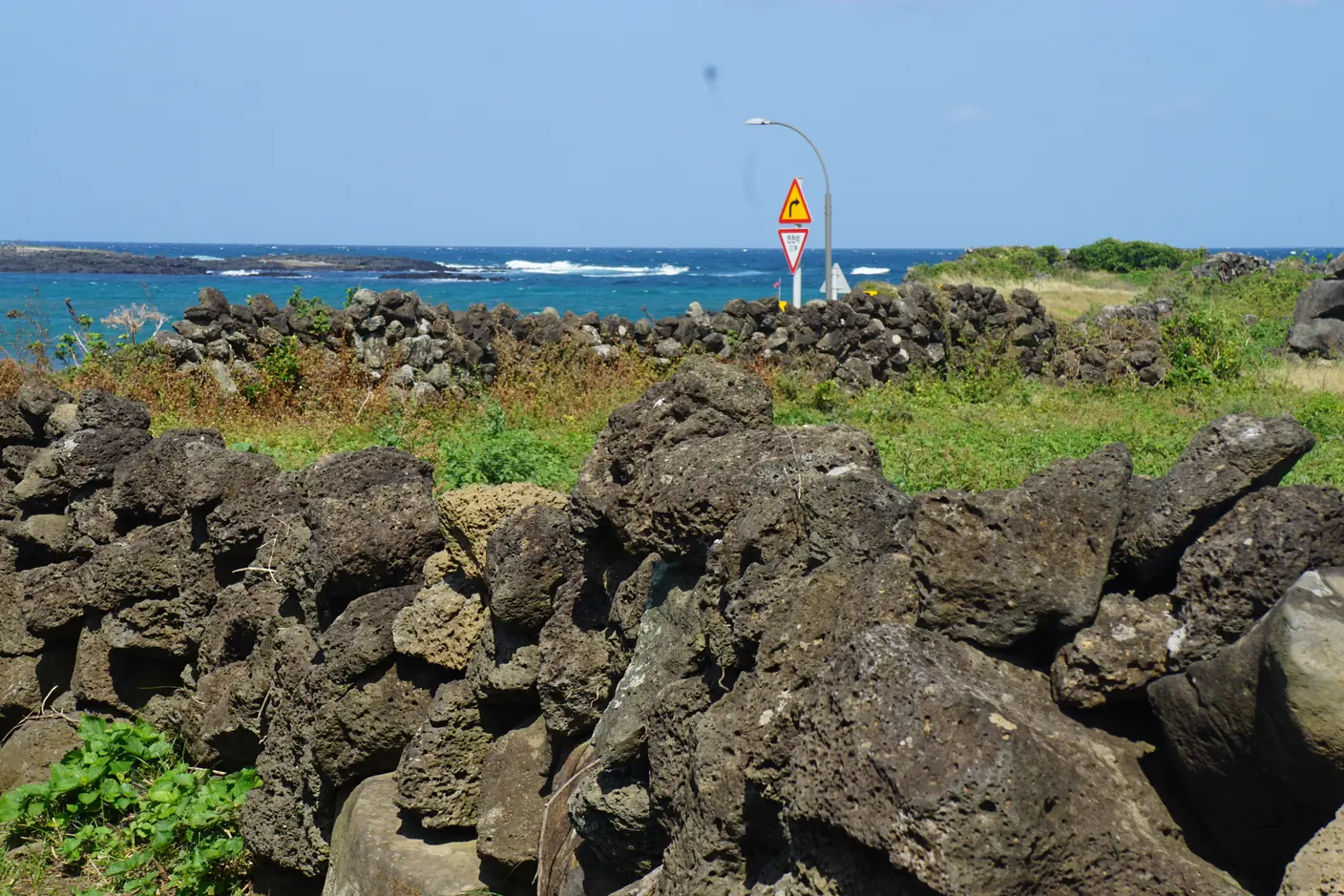
On the sixth walking day you take a ferry from Seongsan to U-do, a small island off the eastern tip, and walk the whole way around it — thirteen kilometres of black basalt, low stone walls and a lighthouse — and then take the ferry back. It is the only day of the trip that finishes exactly where it began. Walkers describe this one first, and usually the way they describe it is that they went nowhere.
And nothing at the end
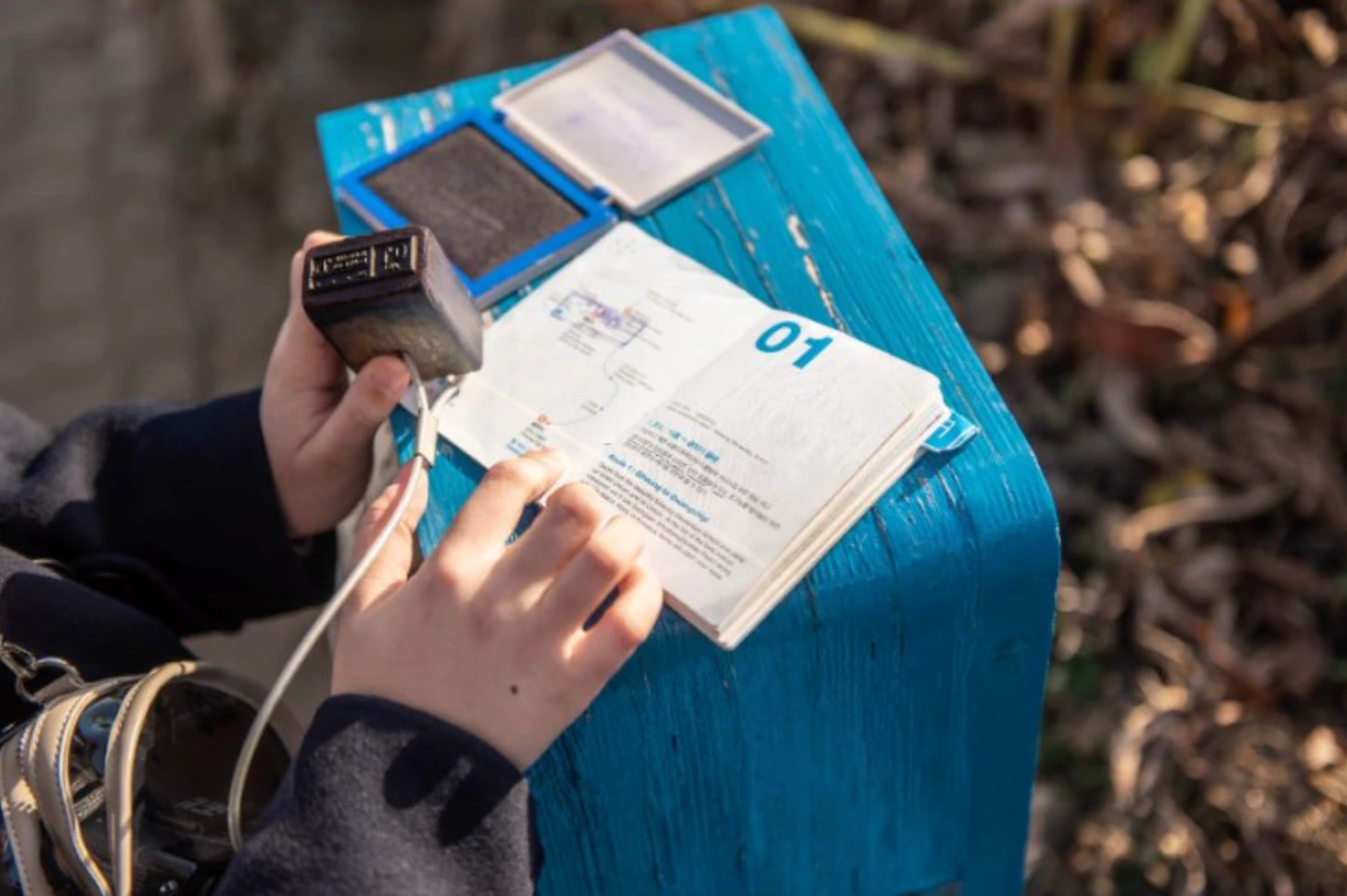
There is no summit on this trip and no finish line. The Olle Trail is 437 kilometres in twenty-seven sections and it does not conclude; you simply stop walking on the eighth day at Onpyeong, and the ribbons carry on around the island without you. What clients bring home is a passport with a week of stamps in it and nothing that says they finished. Most of them spend the first two days looking for the point of it, and the third day realising there is not one.