Fourteen days, five walks, five cities. The trails sit in five different places rather than joining into one long route, and the days between them belong to the cities. Nobody guides you on any of them — and nobody leaves you to work it out alone either.
A message before you set out
Every morning a briefing arrives on WhatsApp: what today's route does, where it starts, where the food is, and what the weather will change about it. You walk without a guide, which is the point, but you are not assembling the day from scratch over breakfast. Operators who have sold self-guided walking know the objection is never the difficulty. It is whether the client feels dropped.
What is waiting at the bottom
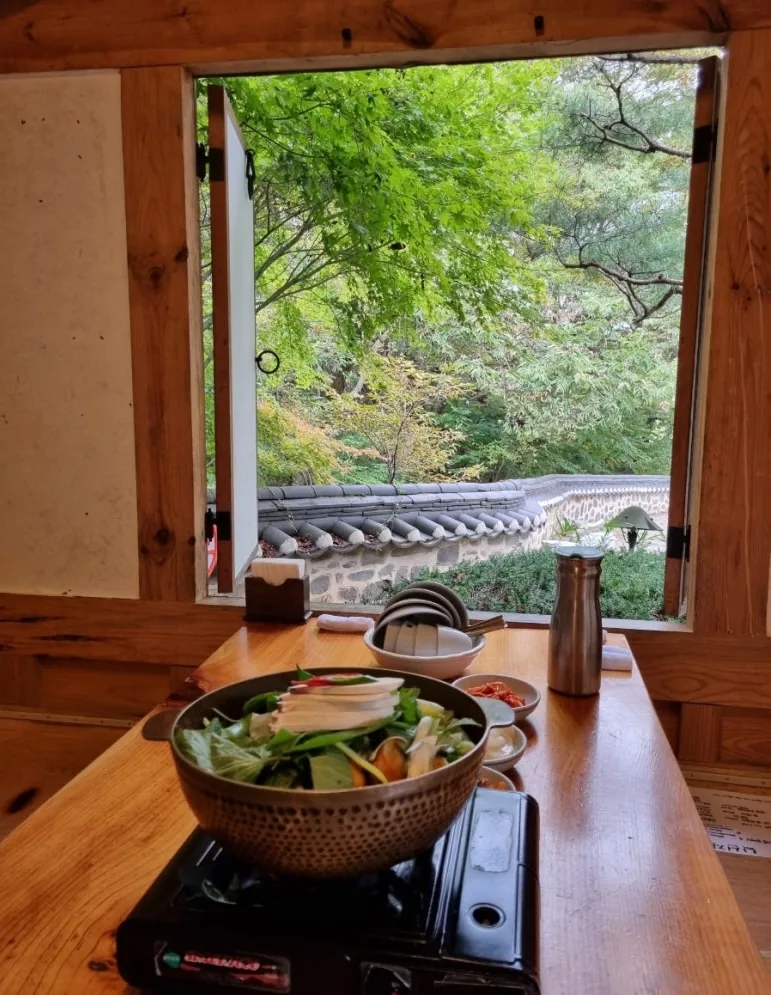
This is the part European walkers do not expect. In the Alps you come down to a hut, or to nothing. In Korea the foot of almost every trail has a row of restaurants — baeksuk, a whole chicken simmered with ginseng and jujube, or sanchae bibimbap built from mountain greens picked nearby. The walking ends and a table starts. Nobody has to carry lunch.
And what is waiting along the way
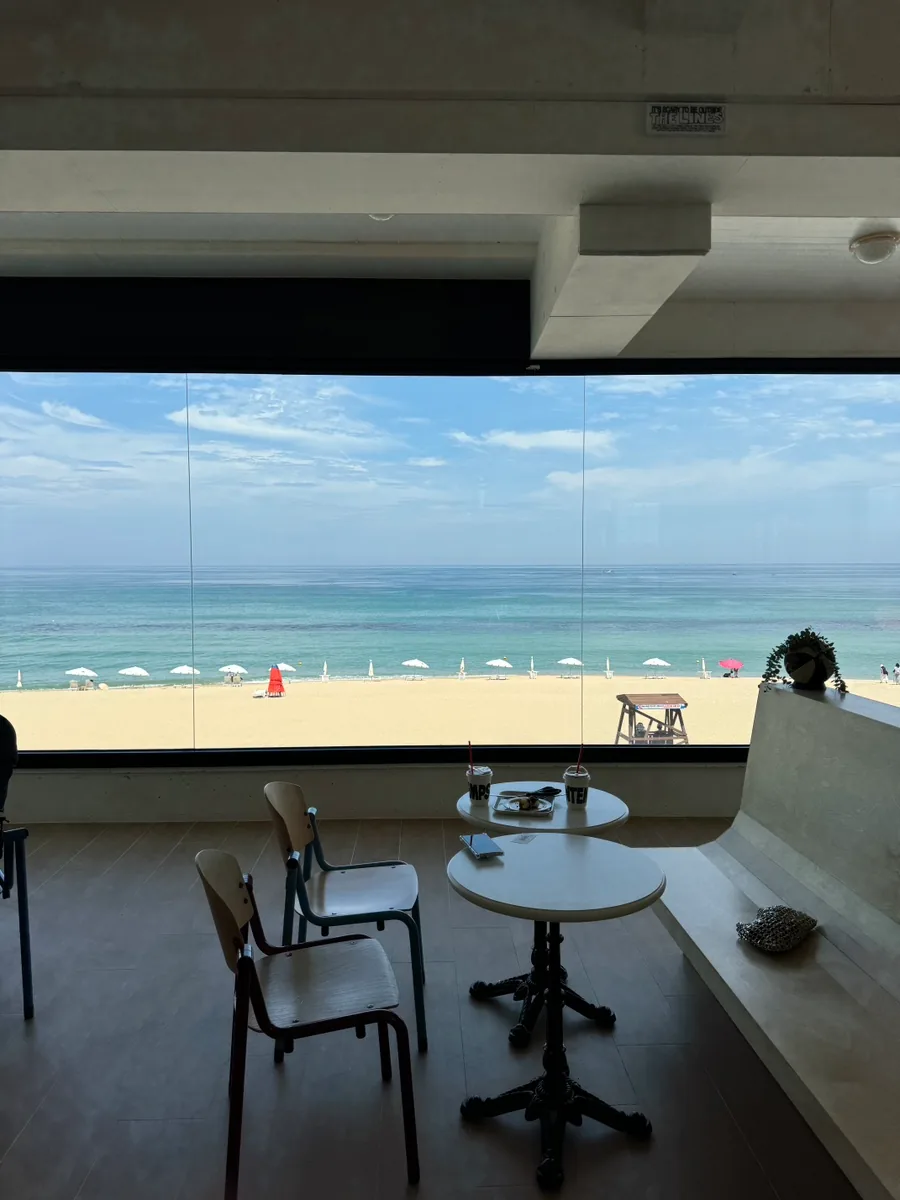
The coastal trails have cafés on them. Not one at the end, but several spaced along the route, with sea views and good coffee, because Korea builds cafés wherever there is a view. It changes what five hours on foot feels like. You stop because you want to, not because you have run out.
A city forest before anything else
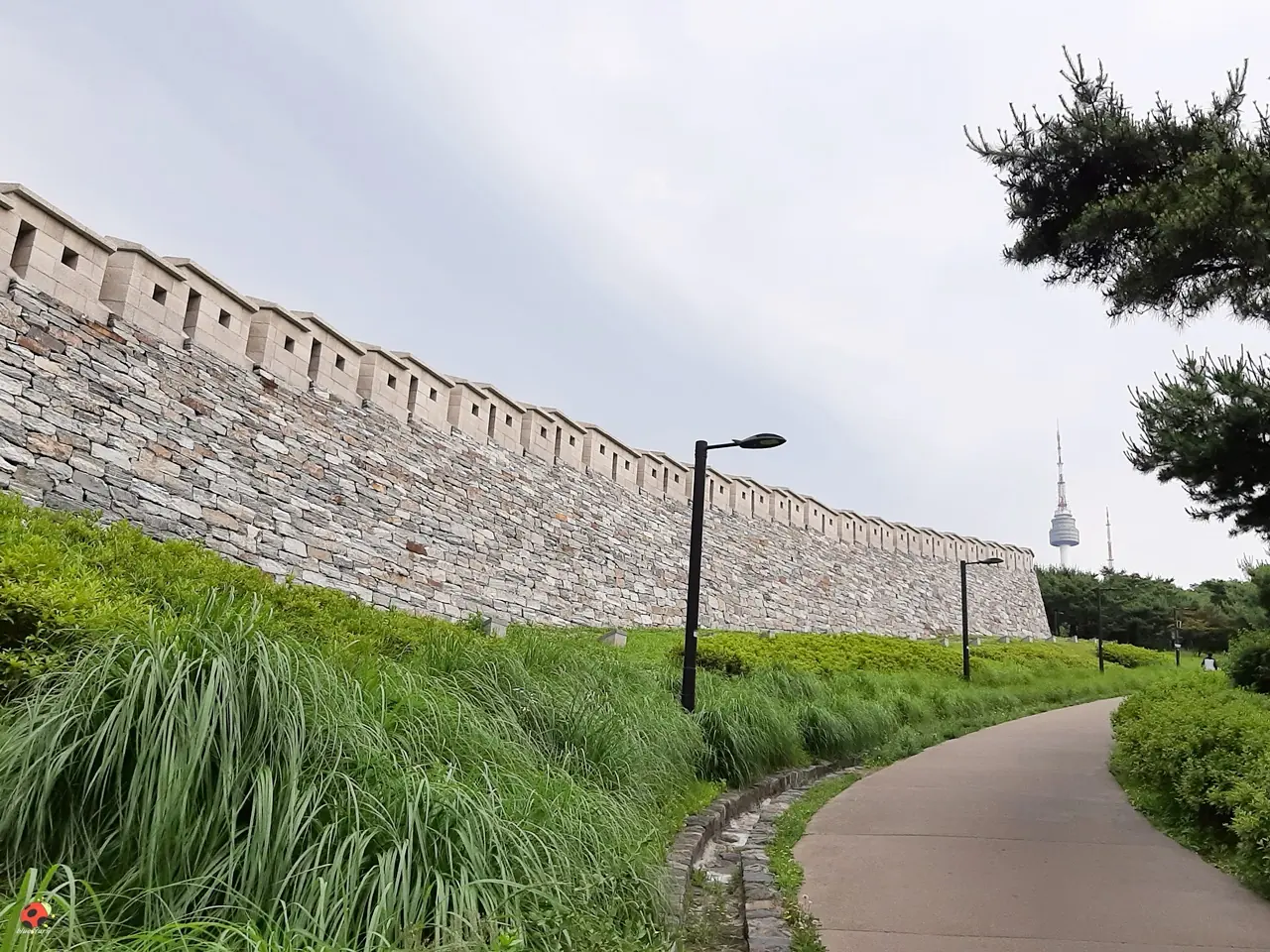
The first trail is inside Seoul. Namsan's Dulle-gil circles the mountain in the middle of the city — two and a half hours, 243 metres, never more than a few minutes from a metro station. It comes on the third day, which is deliberate. It is where you find out how the GPX file works and how far you actually want to go.
Five hours with the sea on your left
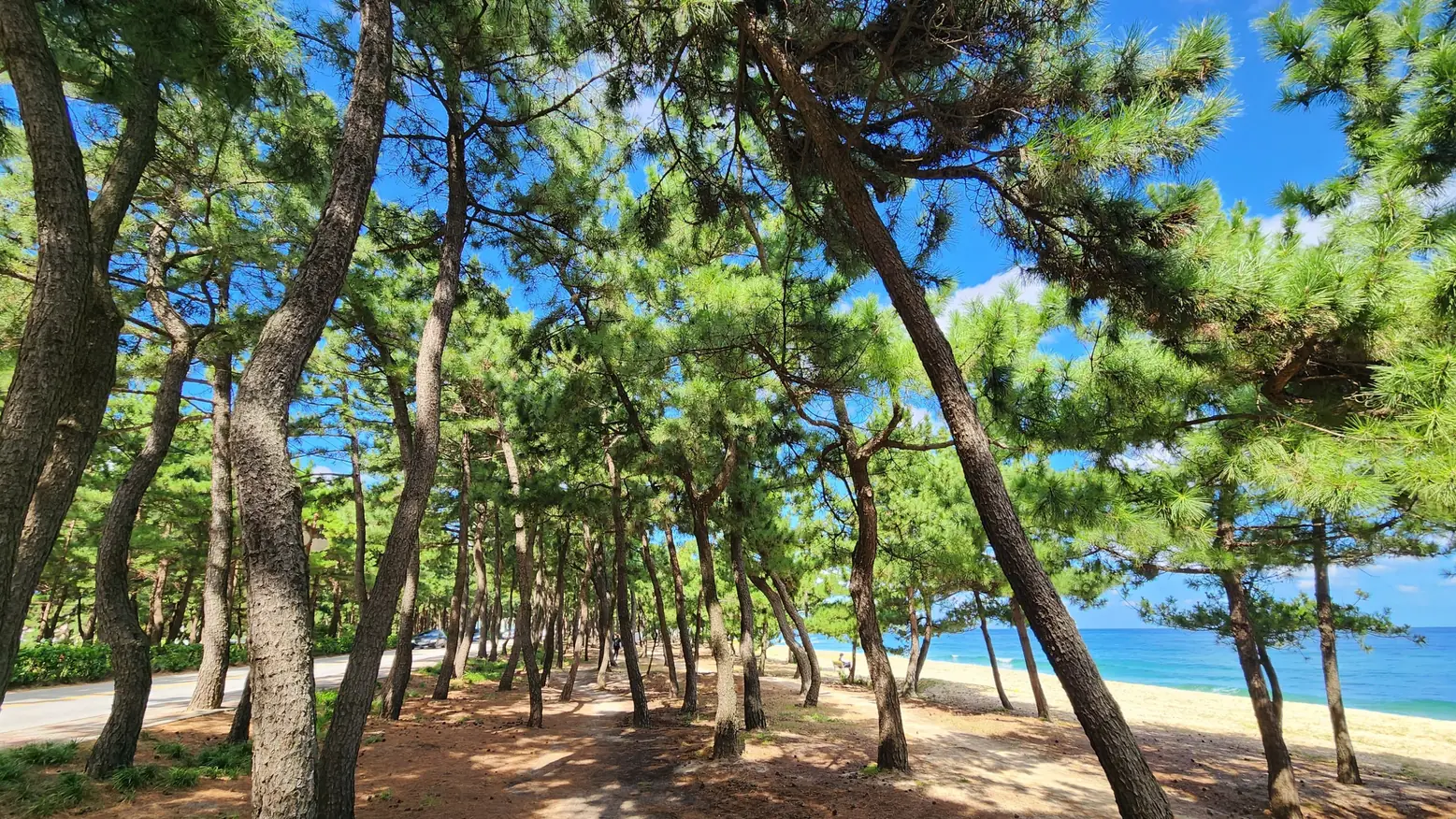
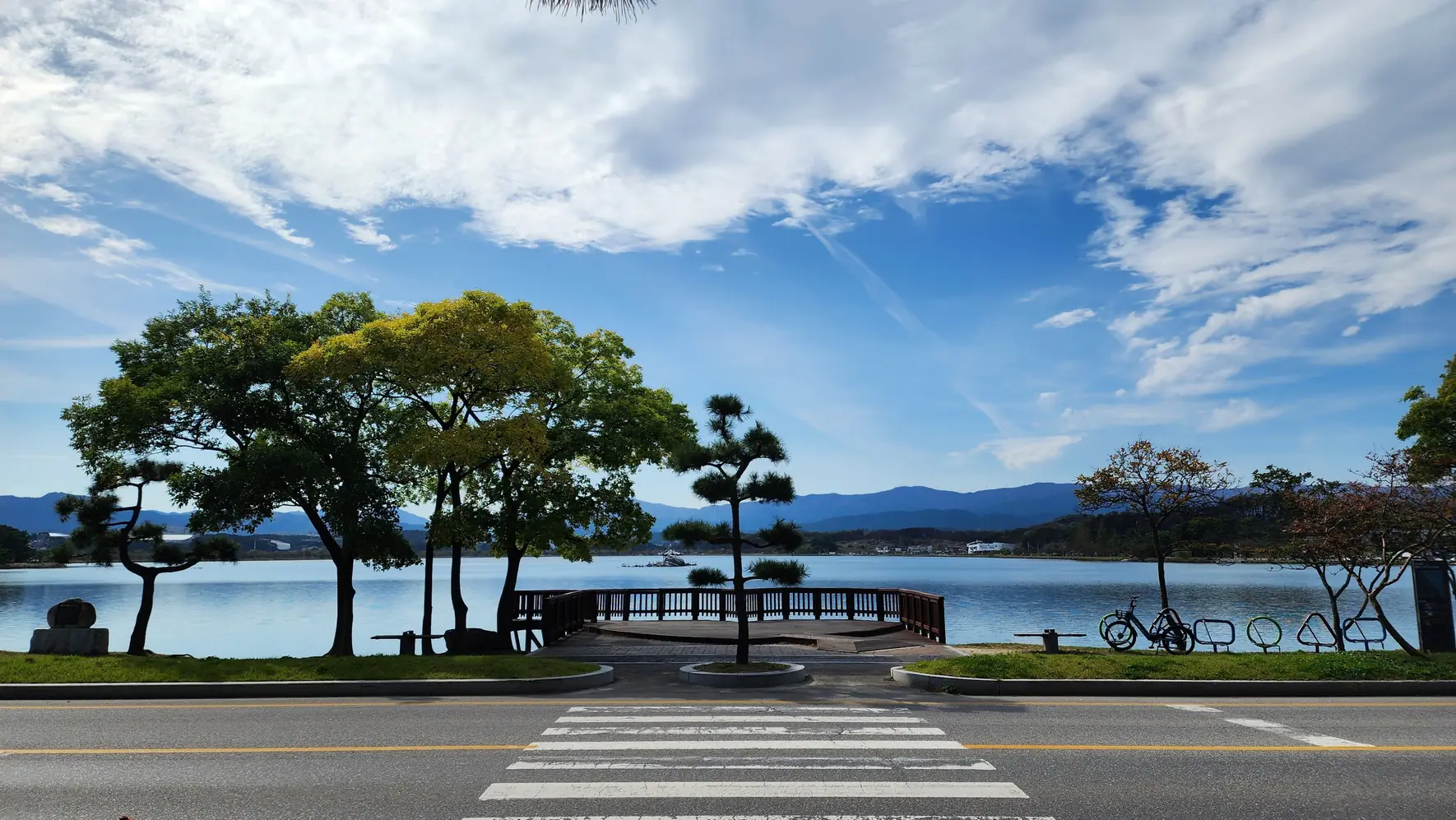
The Gangneung section of the Haeparang Trail runs sixteen kilometres and climbs fifty metres. Almost none of it is uphill. You walk with the East Sea on one side the entire time, past fishing villages and pine, and the effort is in the distance rather than the gradient. It is the least demanding day of the five and the one travellers describe first.
The only real climb
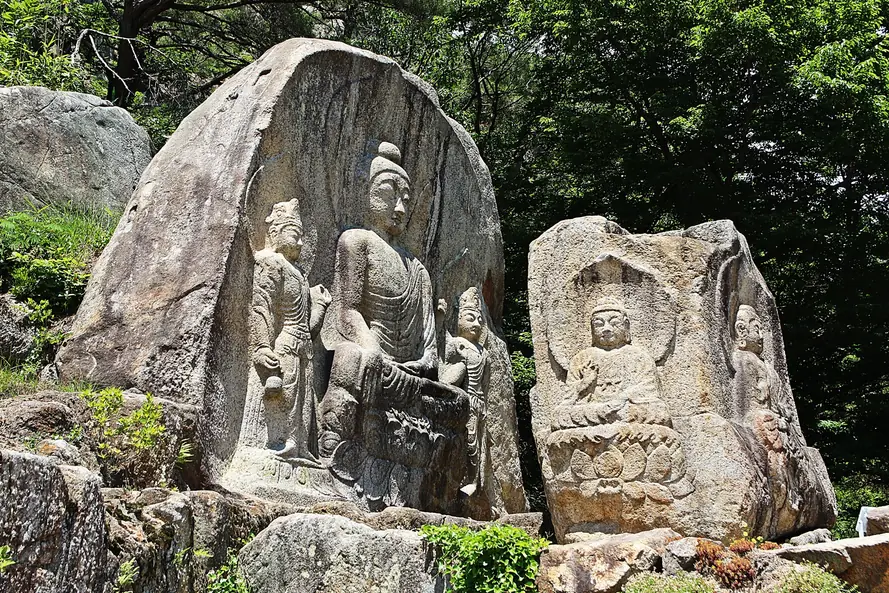
Gyeongju Namsan is the single day with a gradient — 439 metres over seven kilometres. The mountain south of the old Silla capital has Buddhas carved into its rock, some more than a thousand years old, with no fence and no ticket booth at each one. Three and a half hours, and it is the hardest thing in the trip.
The temple, the beach, and the island
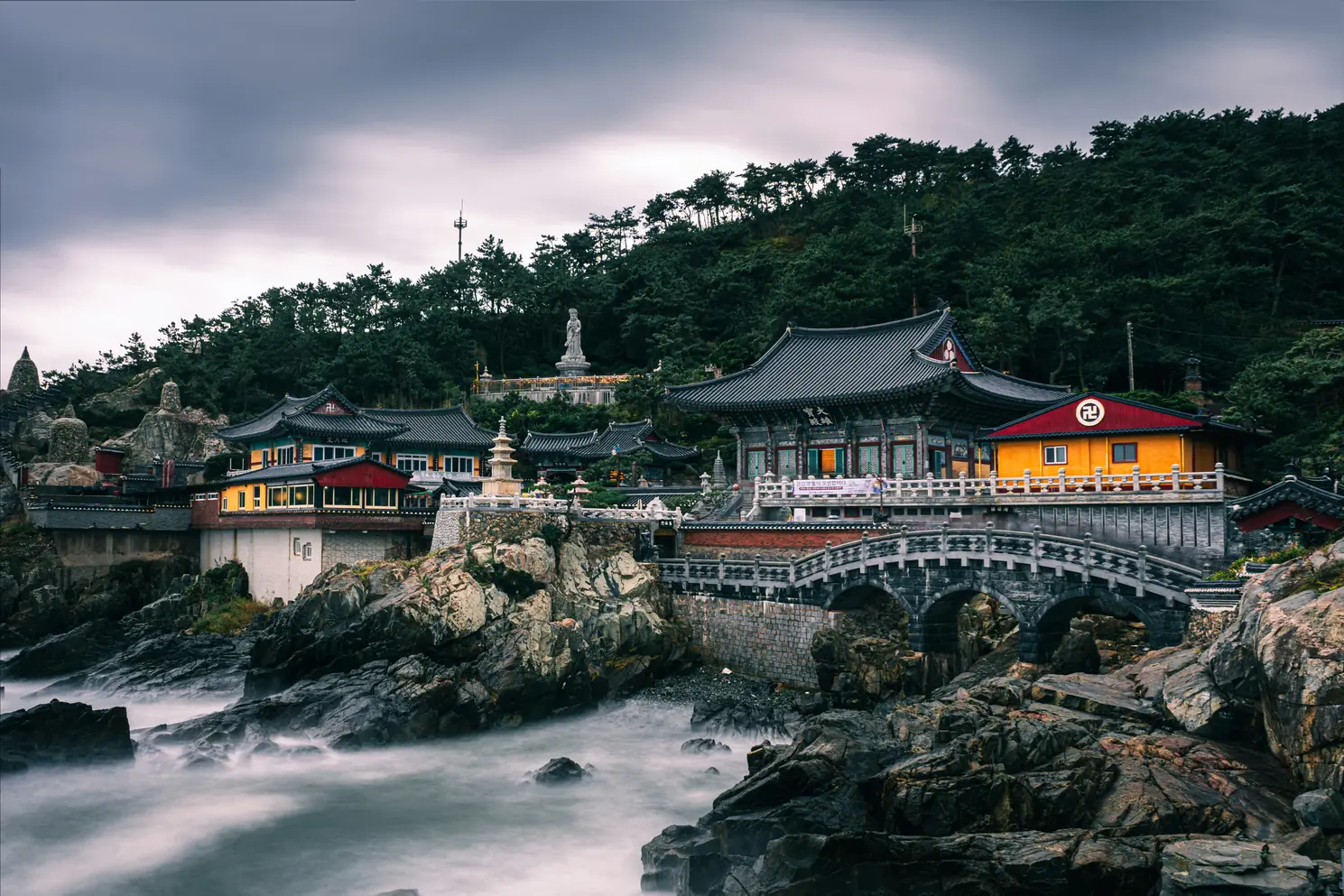
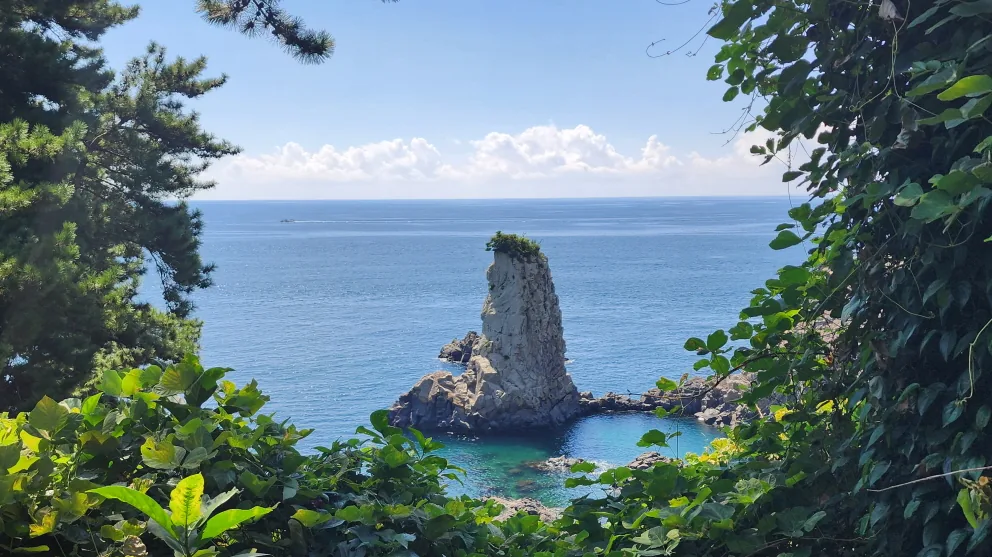
The Busan section starts at Haedong Yonggungsa, built on the rocks above the sea, and finishes at Haeundae — nine kilometres, three hours. Jeju's Olle 7 is the longest: seventeen kilometres of basalt coast, waymarked with ribbons tied to fences and branches. Following them yourself is the point.