Fifteen days, nine bases, every meal and every entrance arranged. The route runs from Seoul to the east coast, inland through the Confucian villages, down to the old Silla capital and the port, out to a volcanic island, then west along the southern bays and back. One guide, French-speaking, for the whole of it.
Three days before the country starts
Seoul first, and properly. The palace and the guard ceremony, the folk museum, the hanok lanes of Bukchon, the national museum, the covered aisles of Gwangjang market, the stream that runs beneath the city and the design plaza above it. Three nights in one hotel while the group finds its feet, its appetite and its sleeping hours. Nothing else begins until that has happened.
The east coast, and the line across it
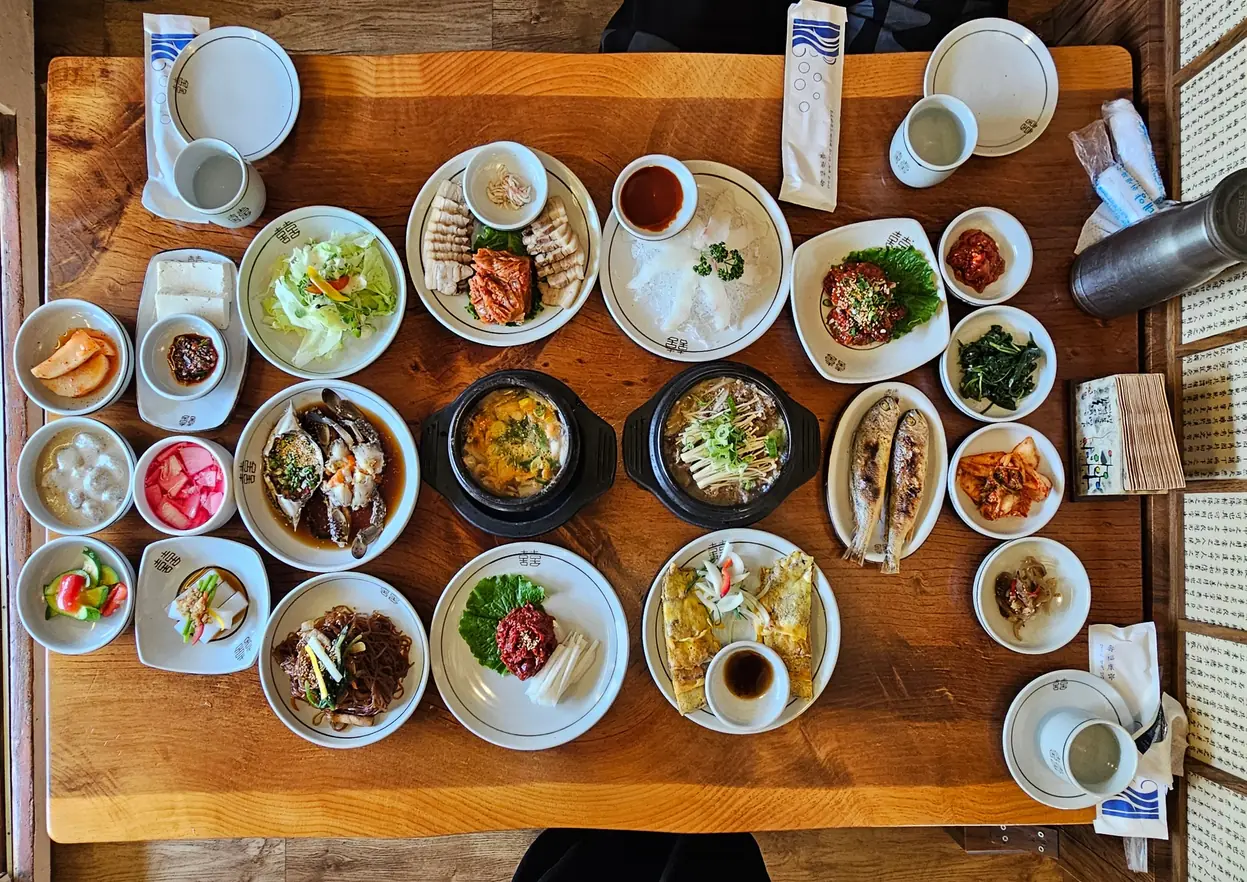
On the fourth day the coach turns east. A cable car lifts the group onto the granite of Seoraksan, and further north an observatory looks out over a line the country has not crossed since 1953. That evening is Sokcho: a fishing port, a raw fish market, the sound of the East Sea from the hotel. Within nine hours the group has seen a mountain, a border and an ocean.
Where the scholars went
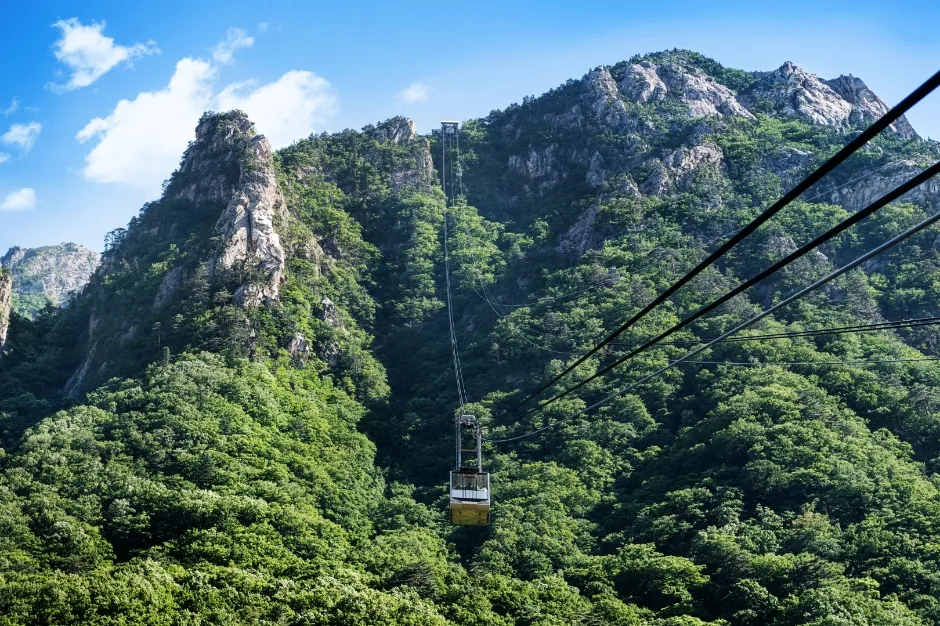
Inland to Andong. A Confucian academy sits above a river, built around a sixteenth-century teacher whose face is on the thousand-won note, and the next morning brings Hahoe — a village of tiled and thatched houses still lived in and still farmed. This is usually where French travellers begin asking why Korean families behave the way they do, and the answer is standing in front of them.
A capital that lost its country
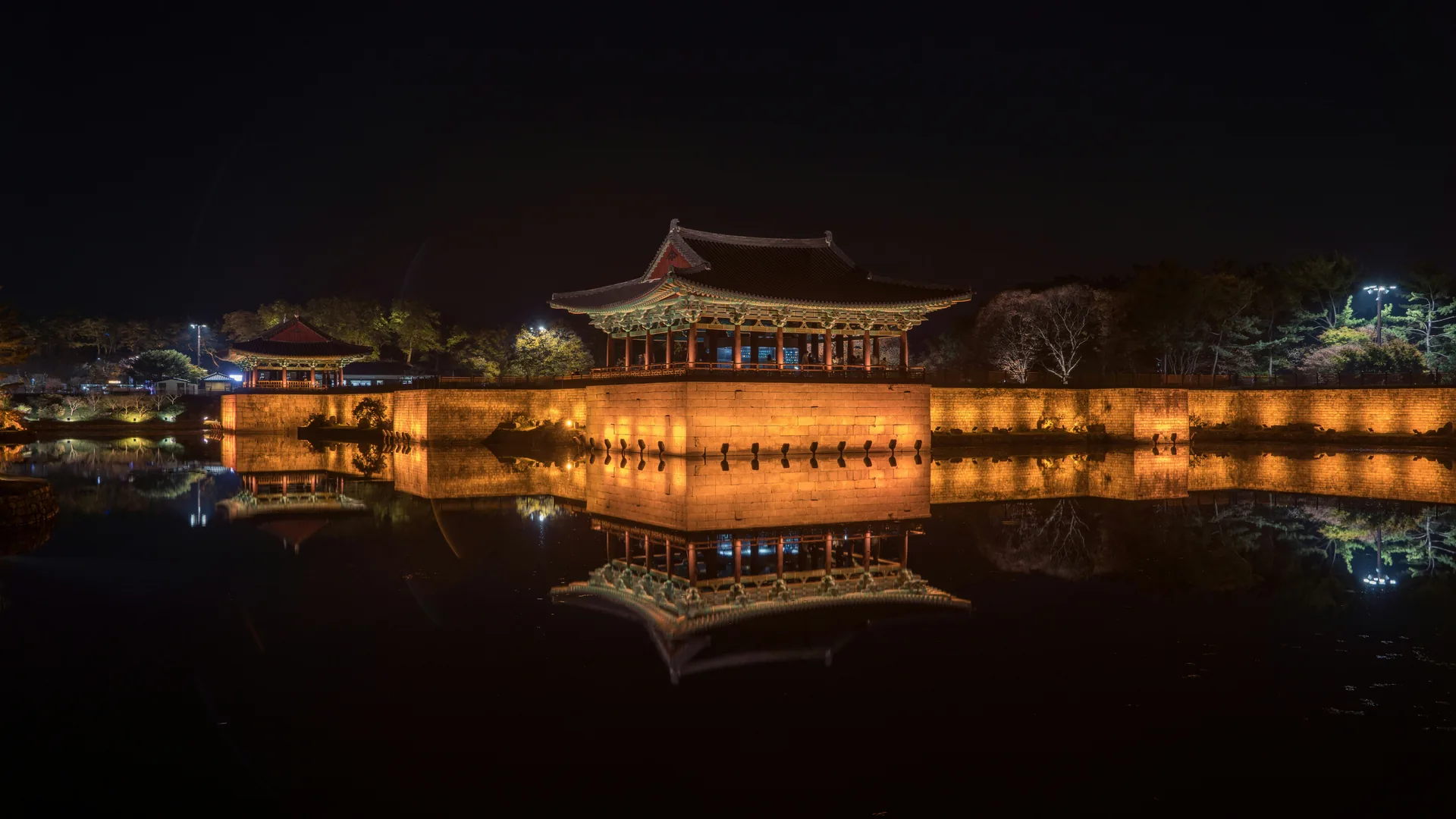
Gyeongju was the Silla capital for close to a thousand years. Bulguksa and the Seokguram grotto in the morning, the royal burial mounds in the afternoon, and after dinner the lit pavilions of Wolji reflected upside down in still water. Cheomseongdae, a small stone tower built to watch the sky in the seventh century, stands in an open field with nothing built up around it.
The port, then the plane
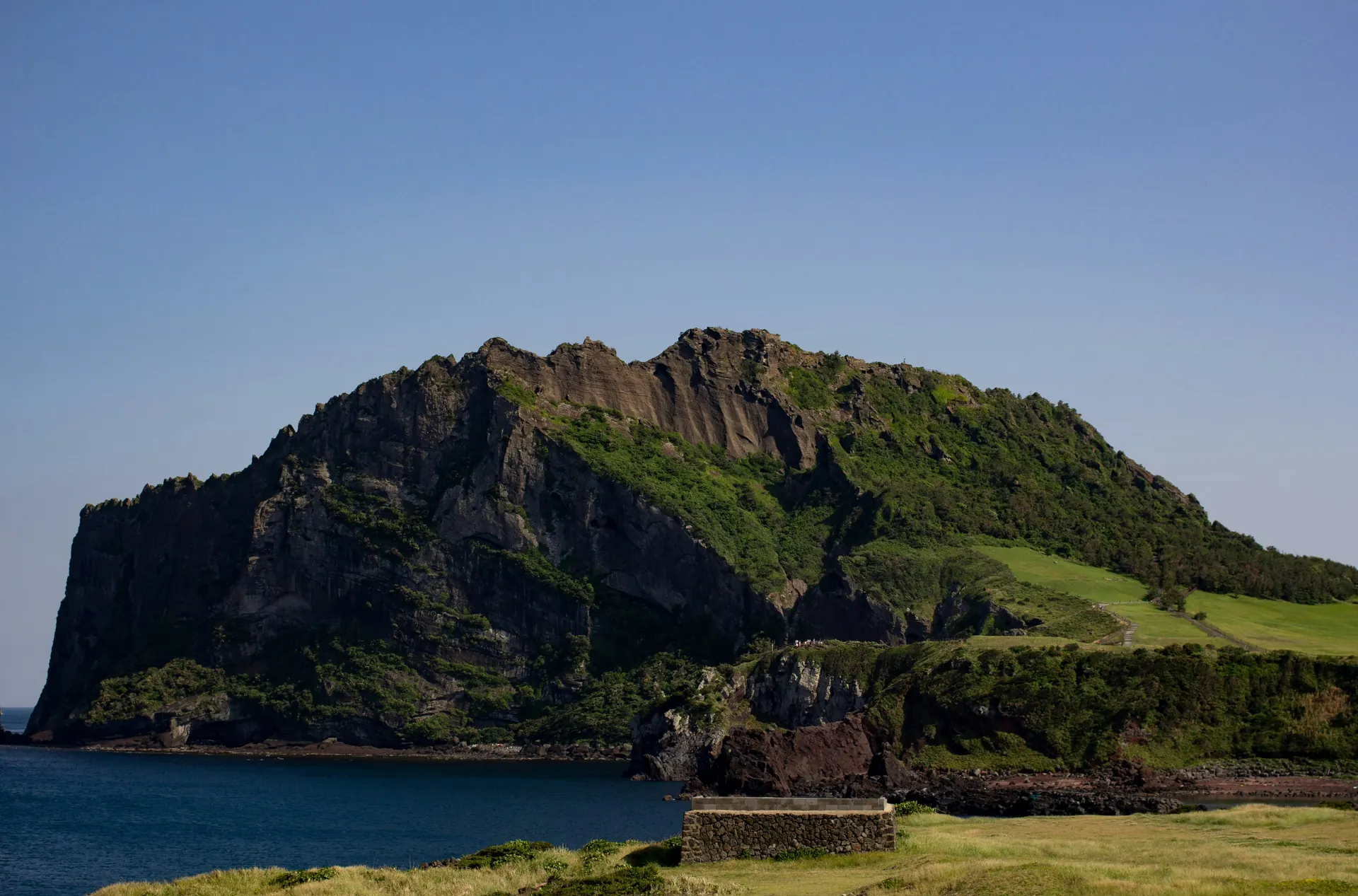
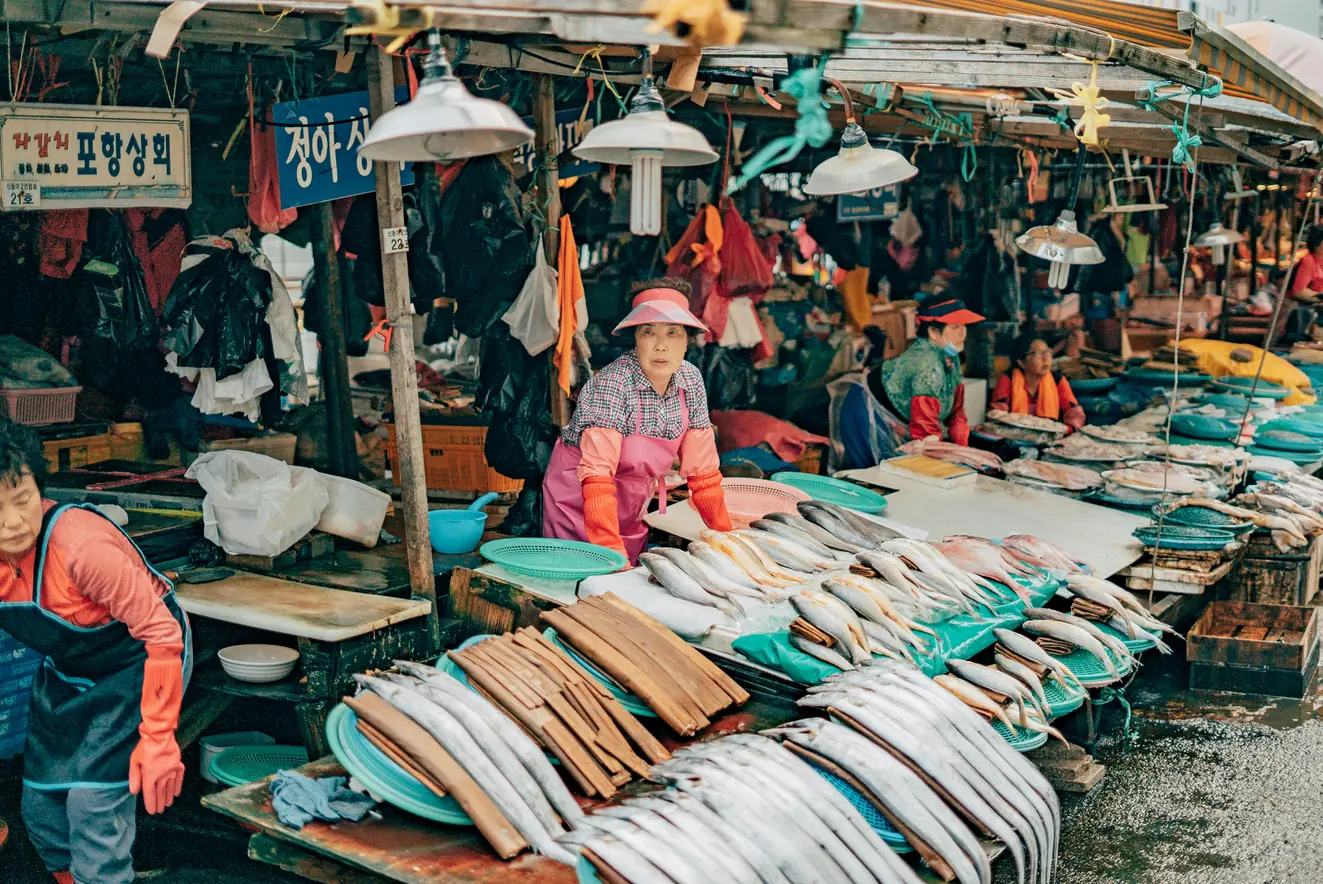
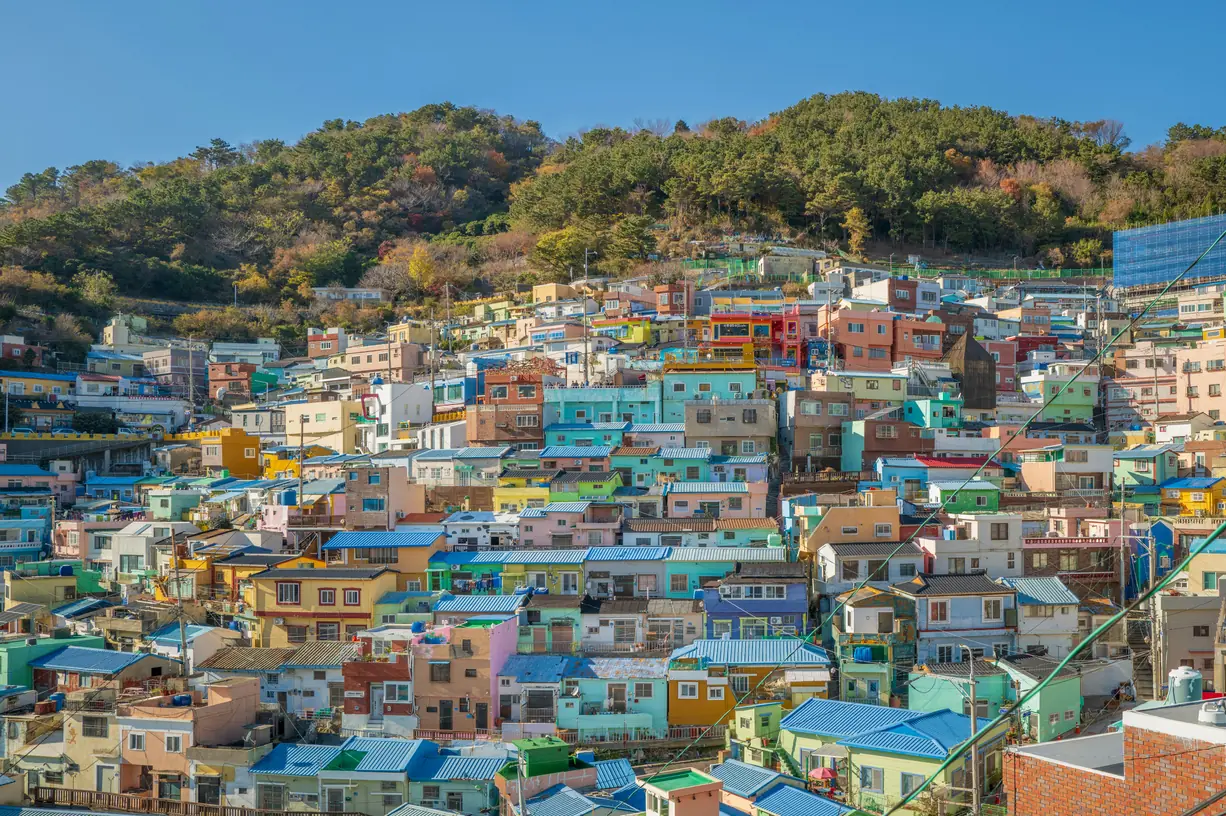
Busan by KTX: grilled fish at the market where it was landed that morning, the cliffs at Taejongdae, painted houses stacked up a hillside above the harbour. Then, on the ninth day, an aircraft. By the afternoon the group is standing on a volcanic crater that rises straight out of the sea, and the country has changed material — basalt instead of granite, wind instead of streets.
Bays, tea and paper
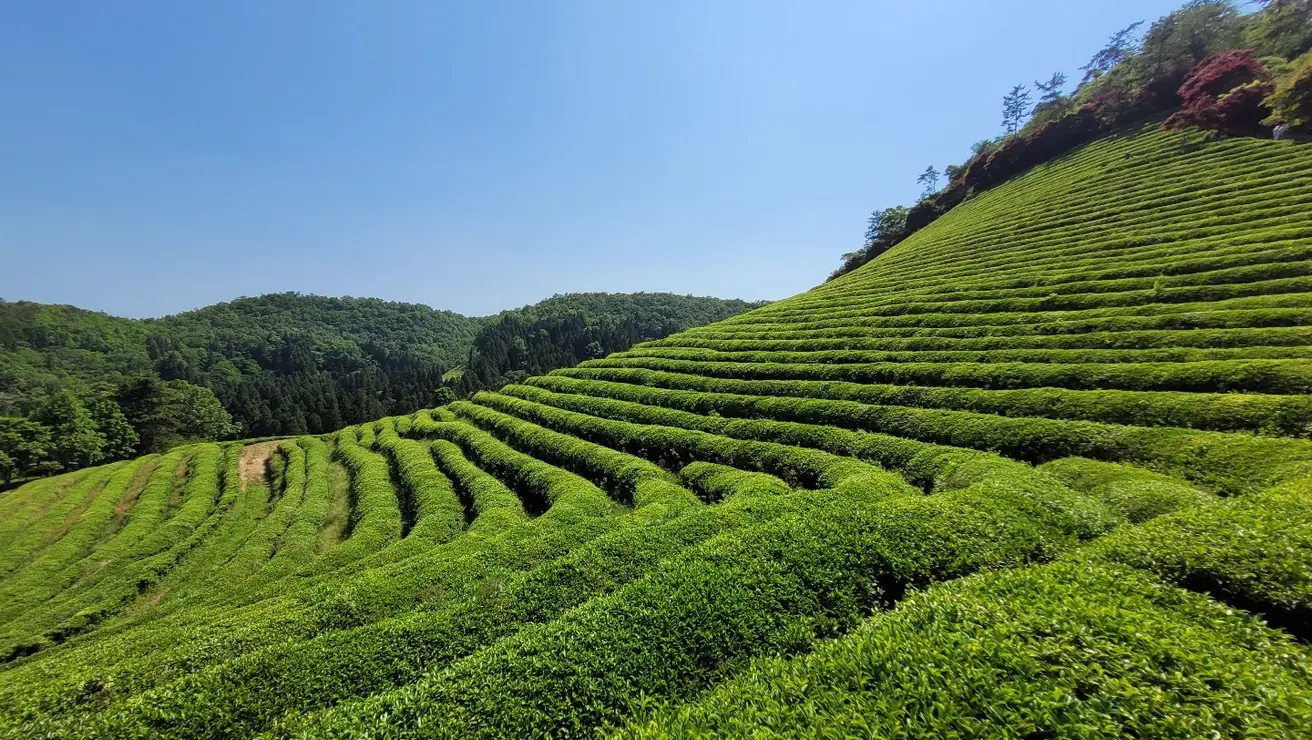
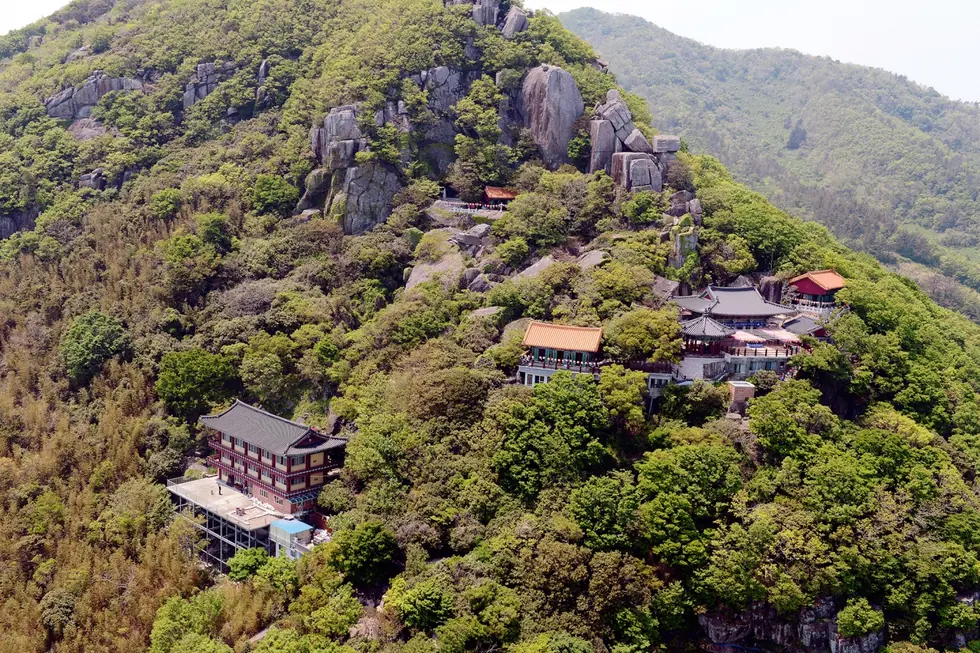
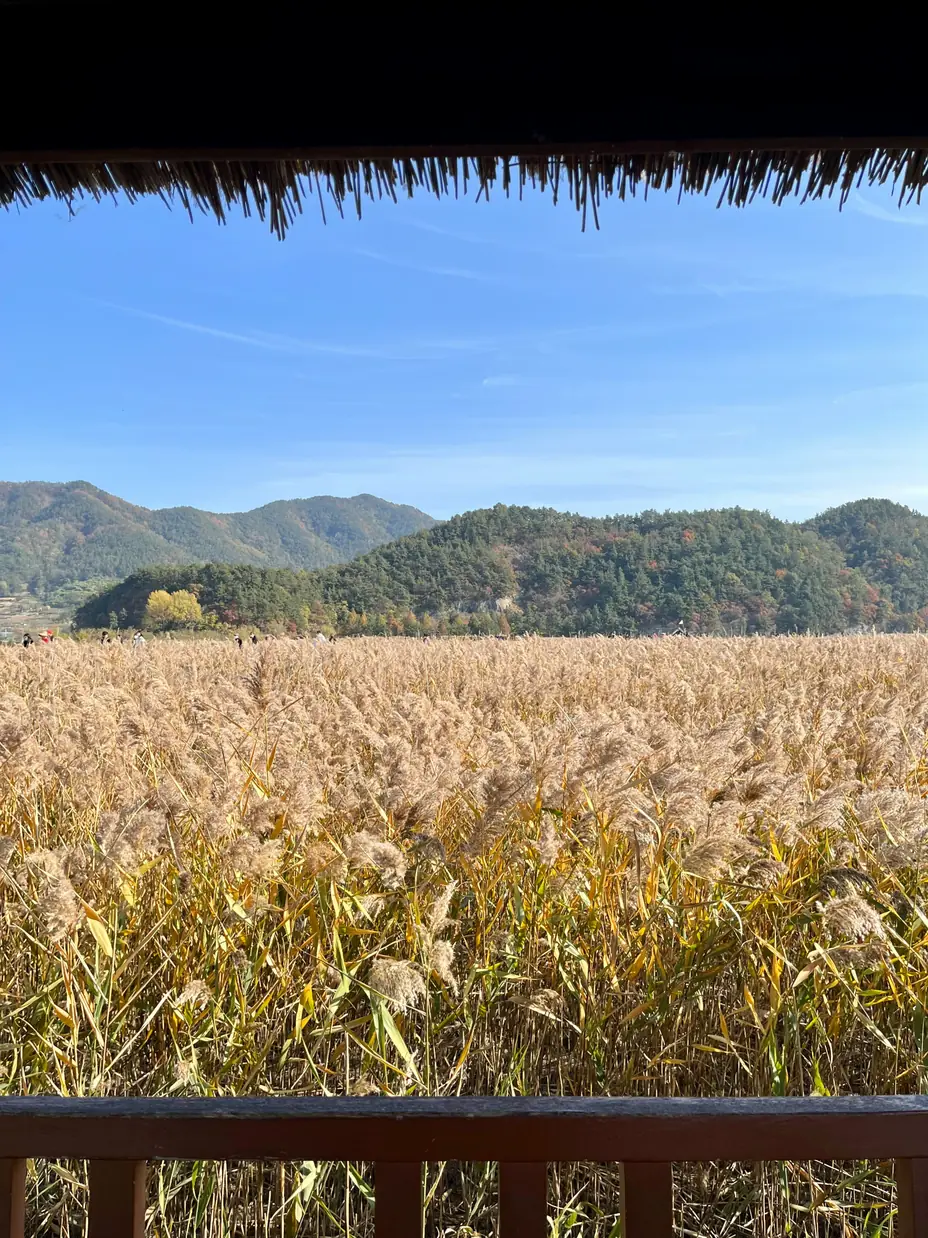
Back to the mainland and west. The wetlands at Suncheon, where the reeds move as a single thing when the wind comes off the bay. A temple on a cliff reached by a long flight of steps, which we tell you about before you book. Tea terraces cut into the hillsides at Boseong. Then Jeonju: its hanok quarter, its paper, and the food the rest of the country argues about.
Back where you started, reading it differently
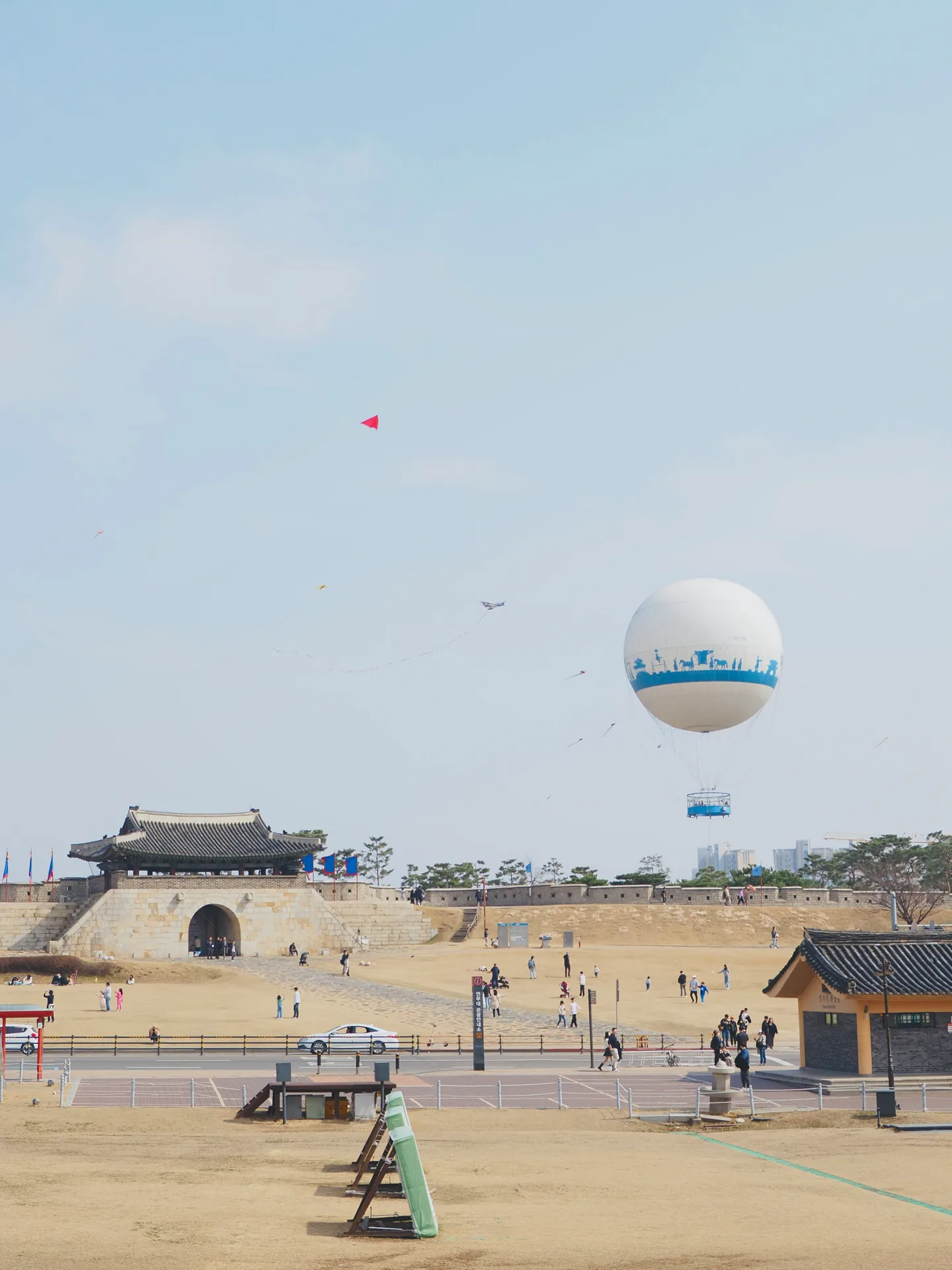
The last two days close the loop. A fortress wall at Suwon built at the end of the eighteenth century, then Seoul again — the palace garden, the shopping streets, the cable car up Namsan. The city that was overwhelming on day one is now the place where you know which exit to take. On the final morning, Insadong, and then the airport.