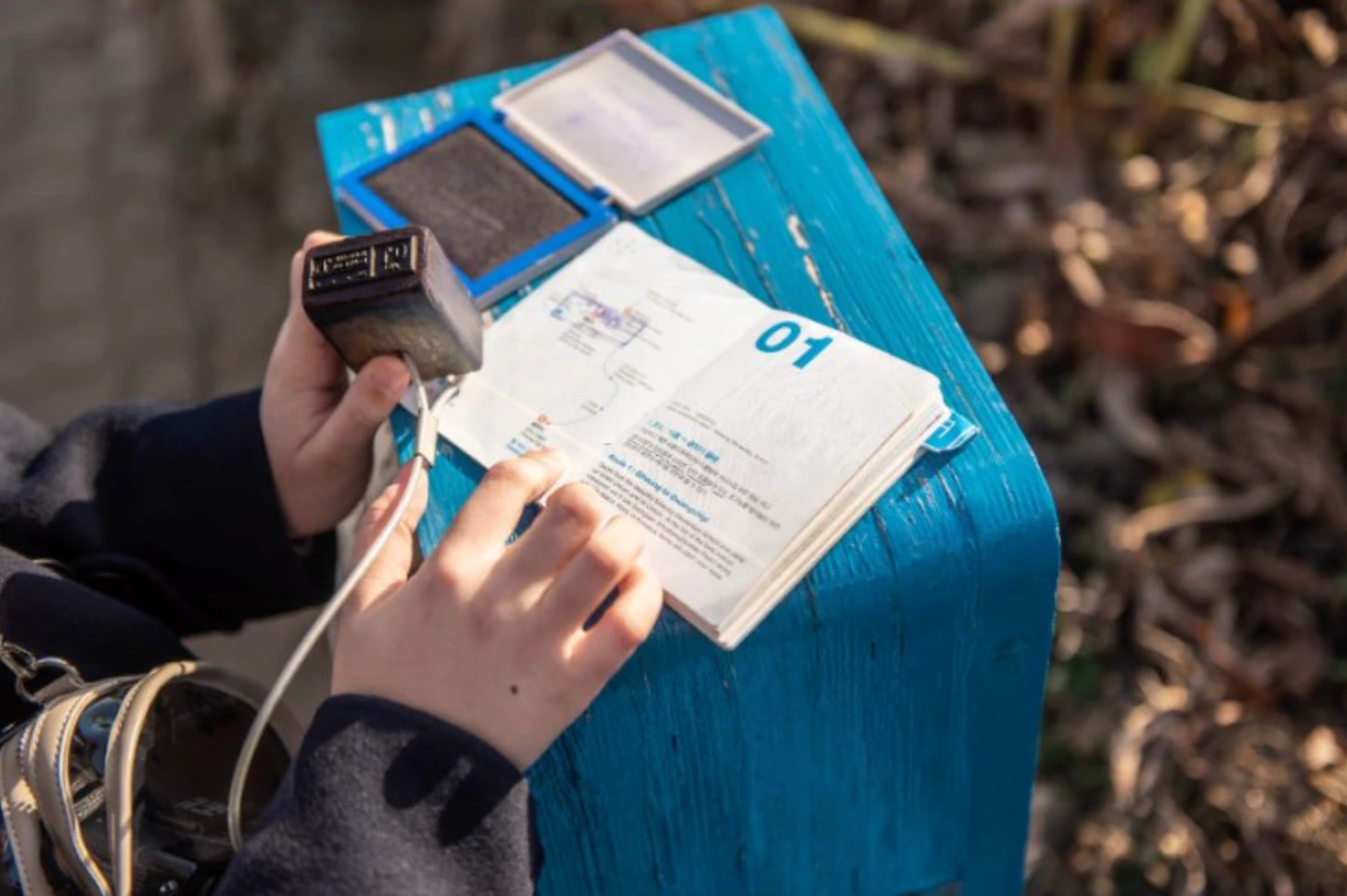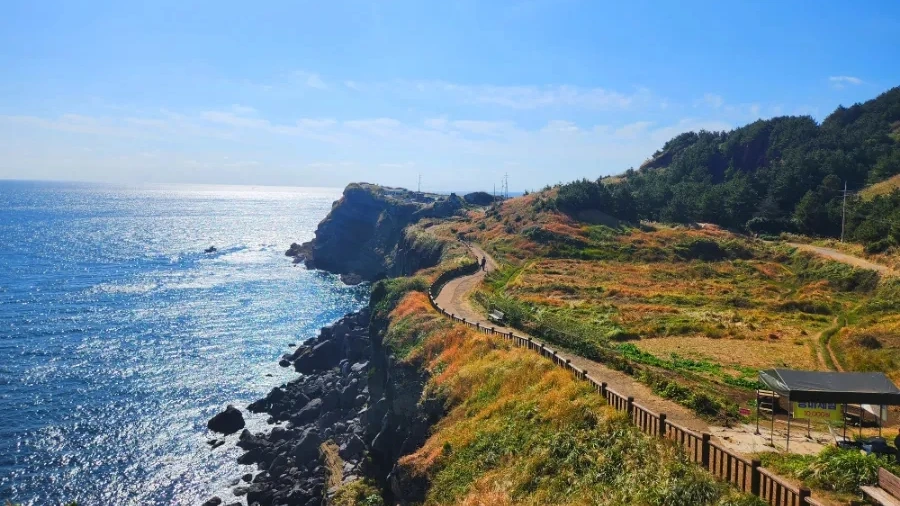
Nine days on Jeju, seven of them walking. The selected eastern sequence totals about 108km of the 437km Jeju Olle network, with the U-do circuit included as one walking day. The trip is self-guided throughout.
What 'Olle' Means
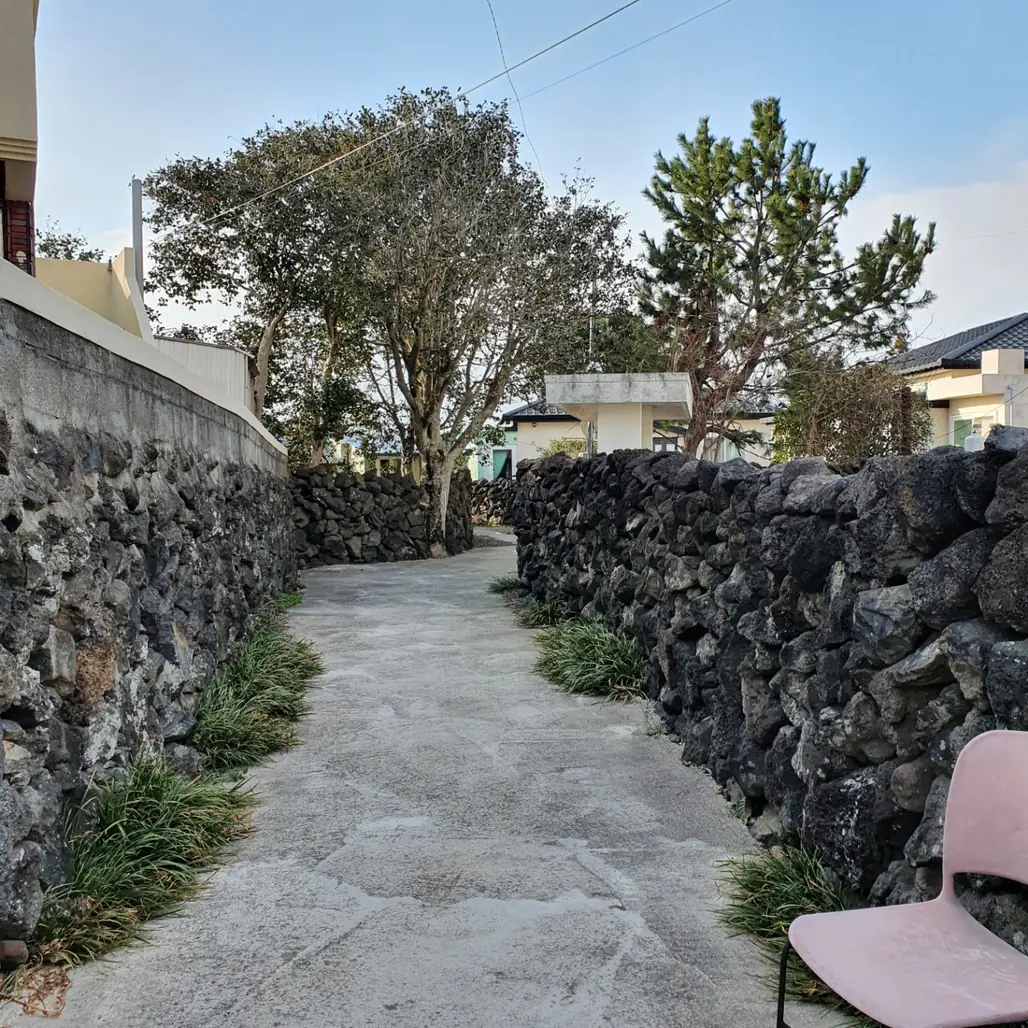
In the Jeju language, olle refers to the narrow lane leading from the main road towards the gate of a house. The trail adopted that local word as its name, grounding the walking experience in Jeju's own landscape and language.
The Ganse Pony
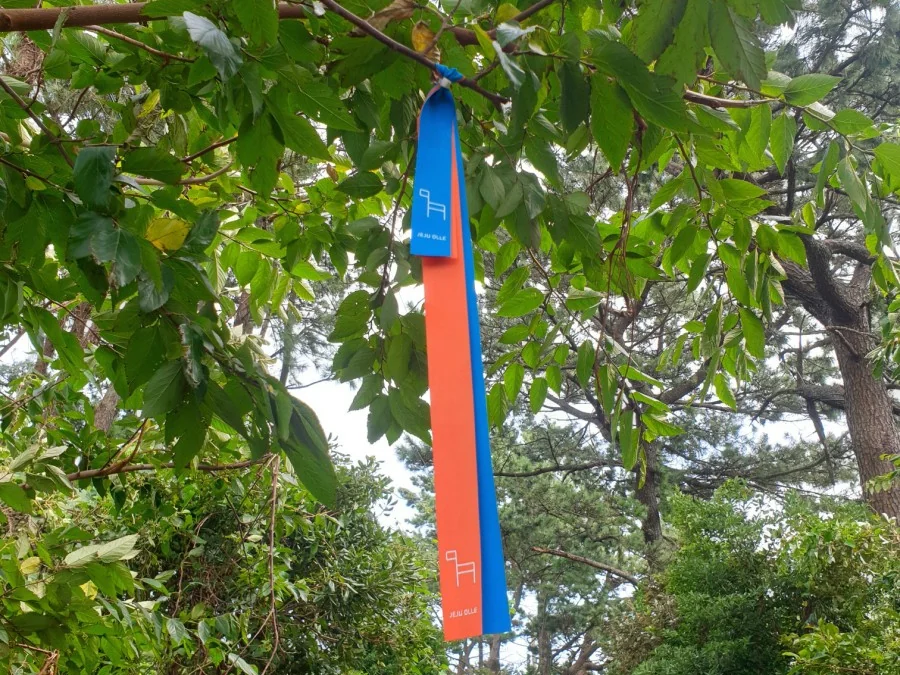
Blue and orange ribbons, wooden signs and the blue Ganse pony mark the Jeju Olle routes. Ganse is one of the trail's distinctive wayfinding symbols and appears where walkers need directional guidance.
Seven Walking Days in Sequence
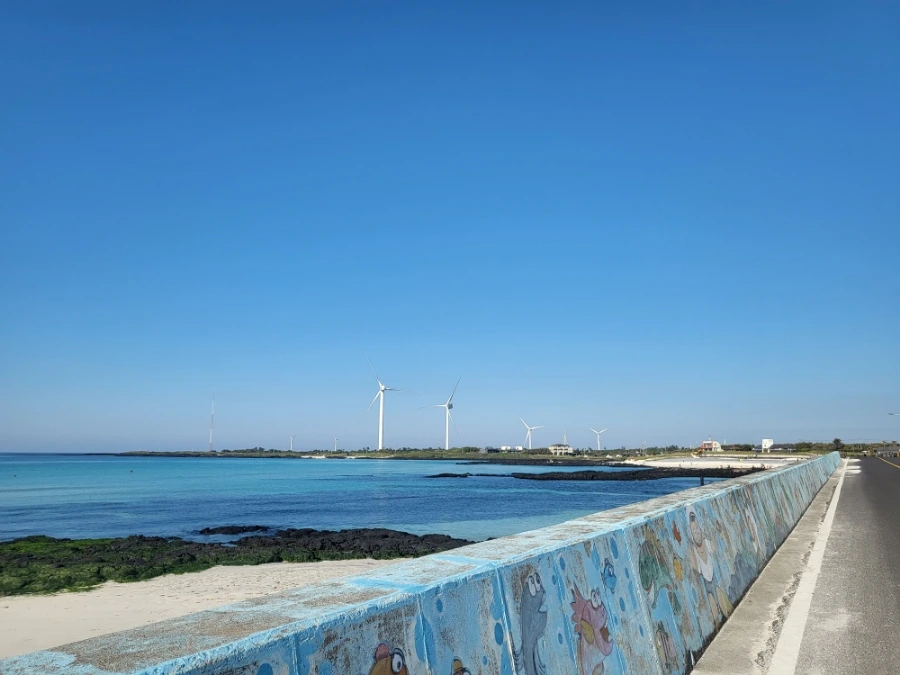
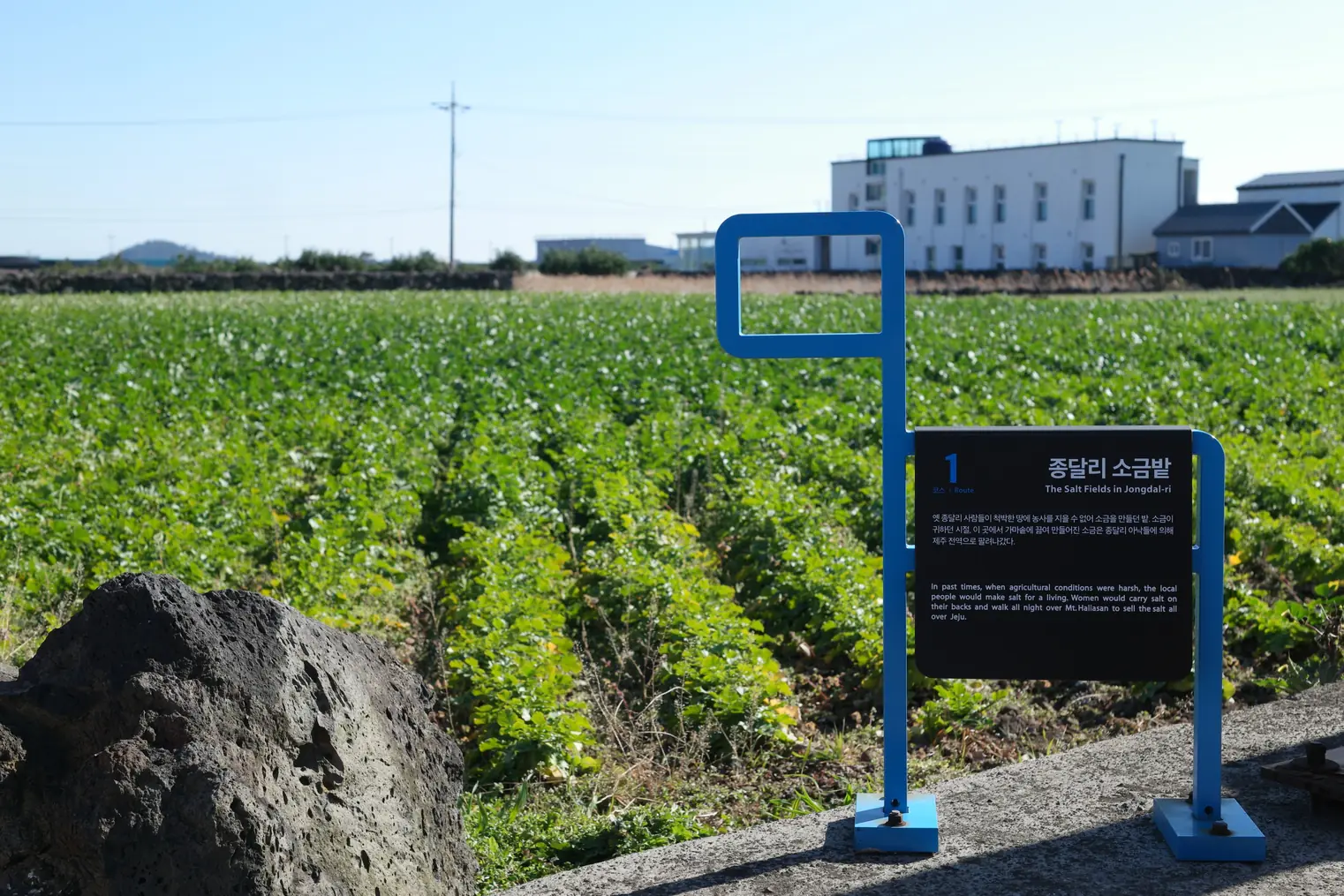
The route runs east and then south from the Kim Man-duk Memorial Hall through Jocheon, Gimnyeong, Hado, Jongdal, Seongsan and Onpyeong. The first four sections are approximately seventeen, nineteen, seventeen and eleven kilometres. The main luggage goes ahead while travellers walk with a day pack.
Low Volcanic Hills, Not a Mountain Summit
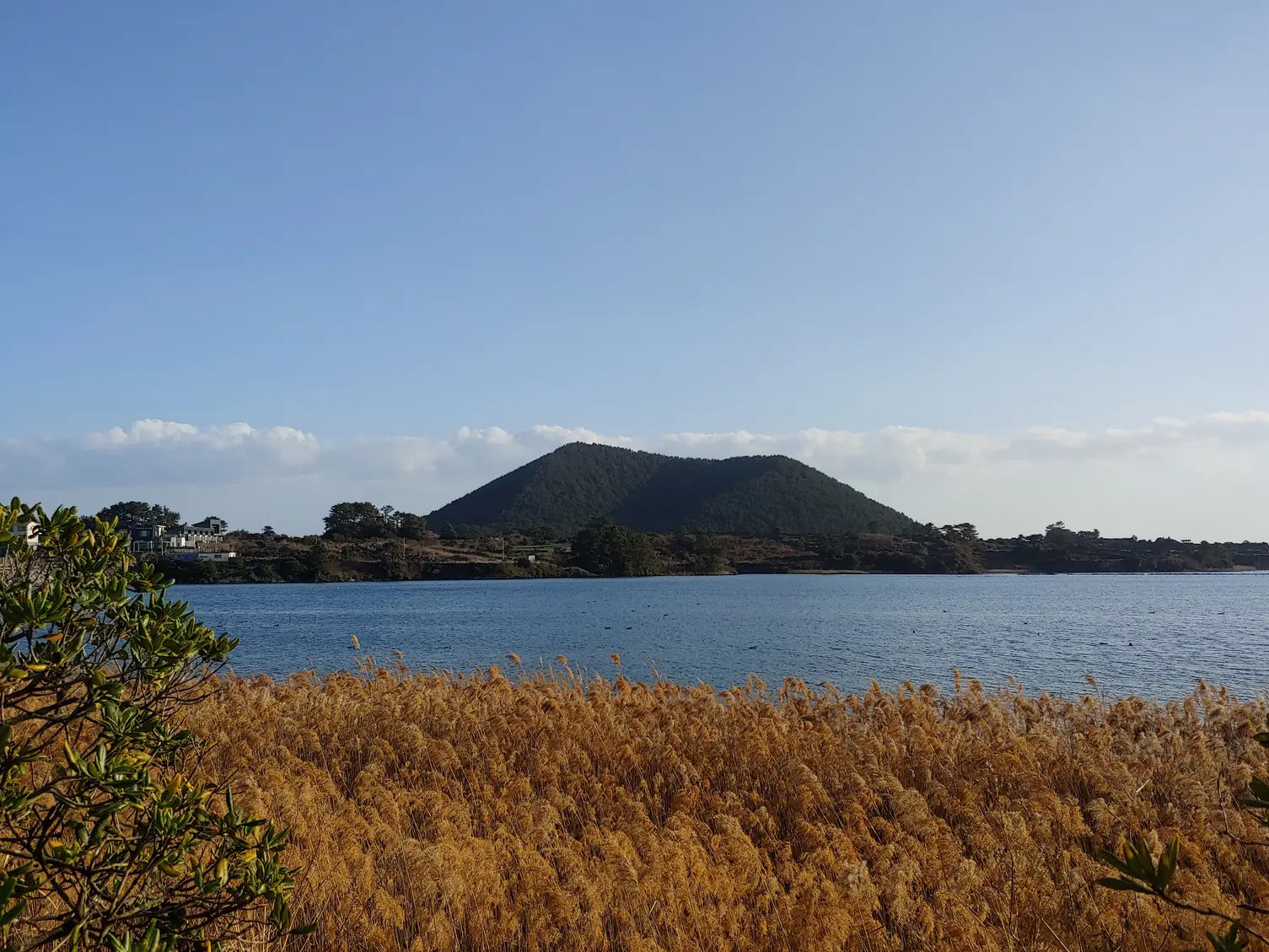
One of the eastern Olle sections crosses Malmi Oreum and Al Oreum behind Siheung, adding two short low-hill climbs before the route reaches the Seongsan area.
A Circuit on U-do
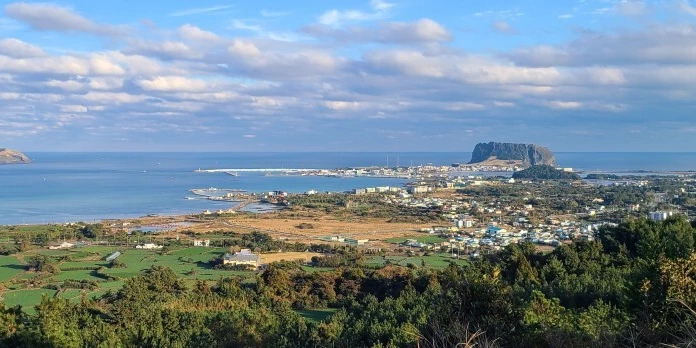
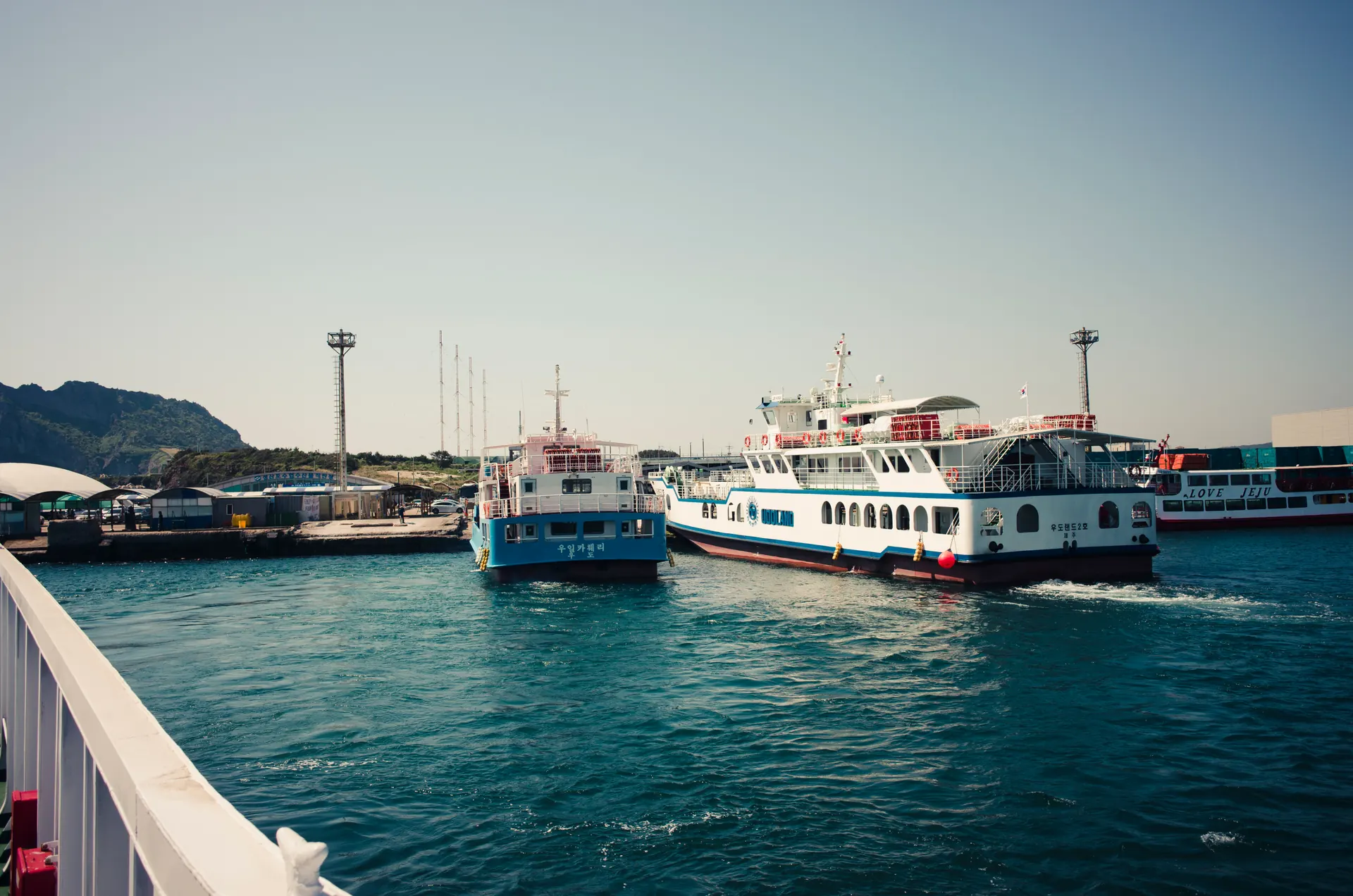
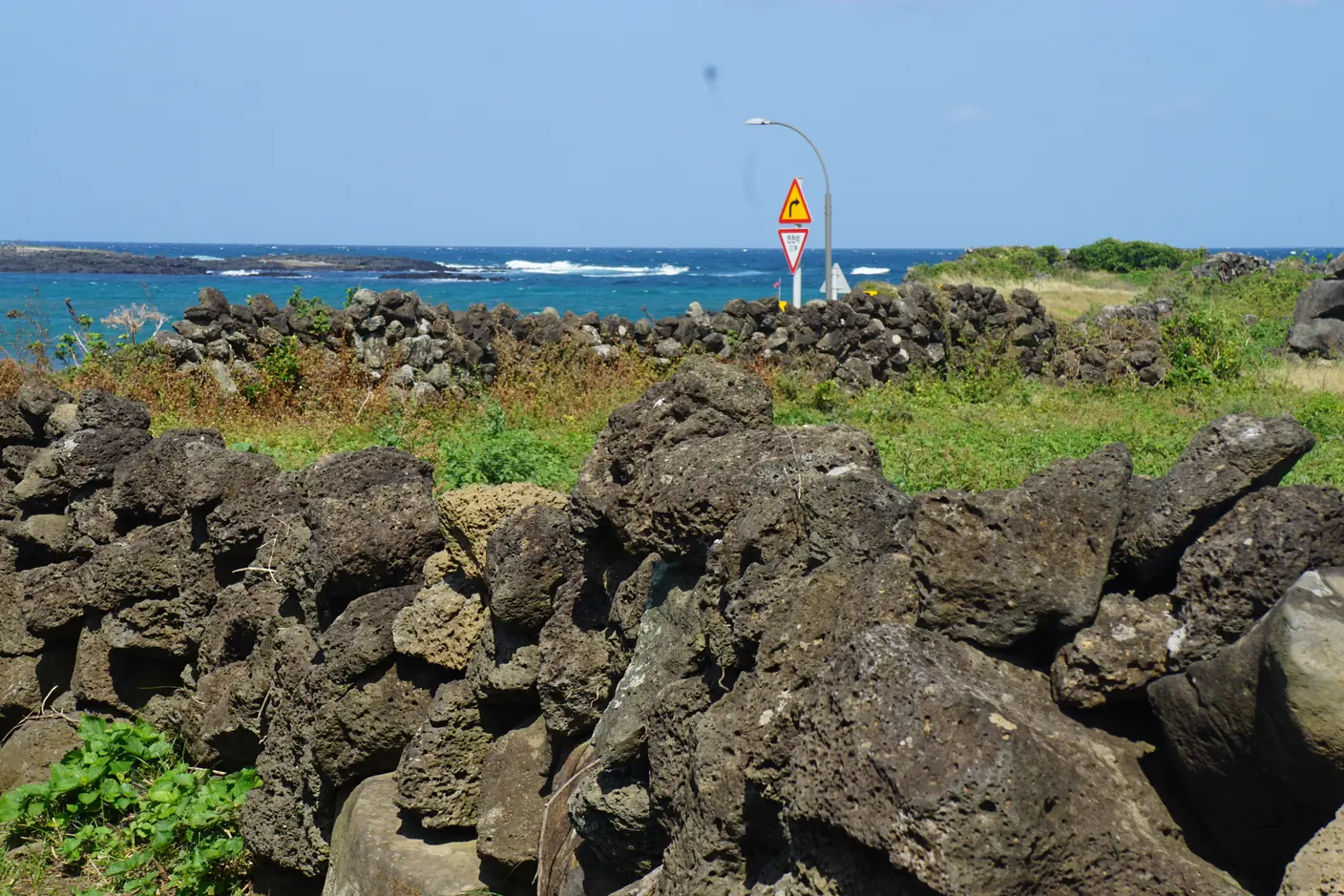
The sixth walking day uses Jeju Olle Route 1-1 on U-do, a 13.2km island circuit reached by ferry from the Seongsan area. It adds basalt coast, village roads and island scenery before the programme returns to the main Jeju route.
The Trail Continues
Jeju Olle currently extends for 437km across 27 routes. This programme covers only a selected eastern sequence, ending at Onpyeong while the wider trail continues around the island. Travellers finish with a Jeju Olle passport carrying a week of route stamps rather than a conventional summit finish.