Seoul is a city of nearly ten million people, most of whom are not sightseeing. They are heading to the bathhouse, carrying lunch through a market or sitting by the river in the evening. This programme spends five days inside that everyday rhythm, based in one neighbourhood and explored largely on foot.
The hours we leave empty
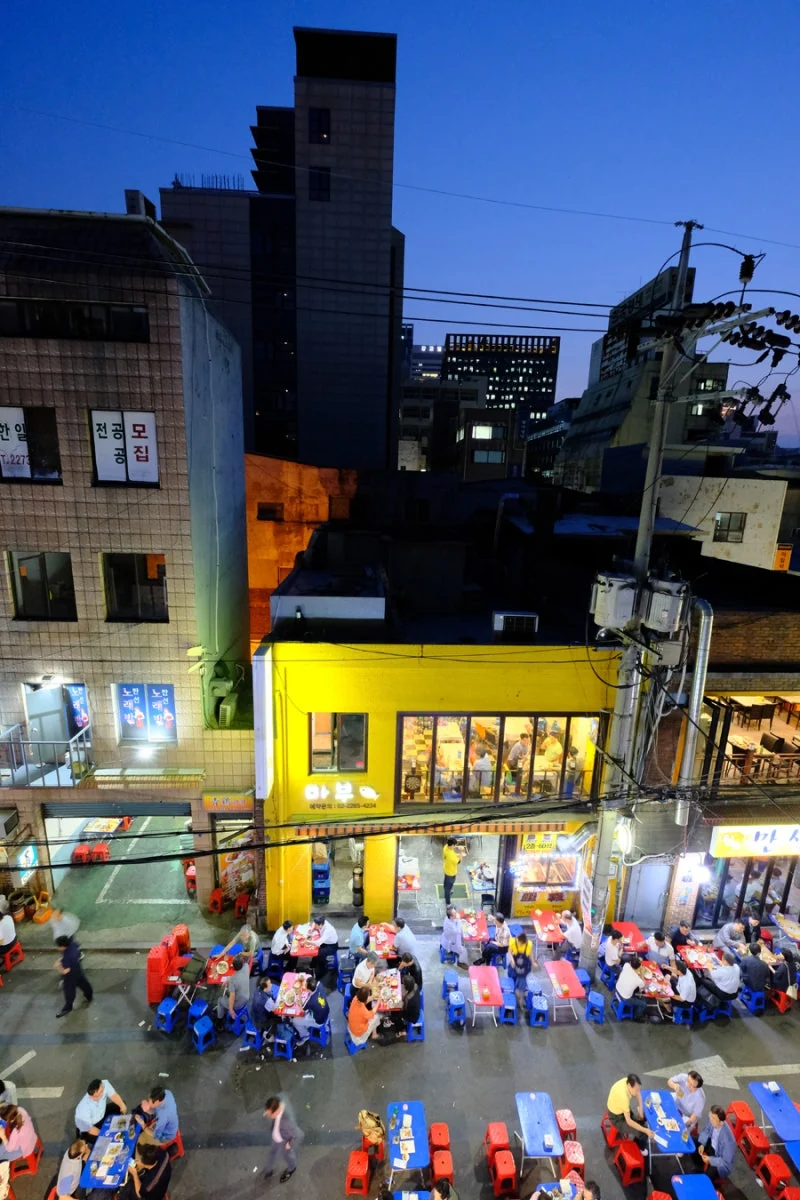
Three blocks of the trip are left open — two afternoons and one evening. This is deliberate rather than a gap in the programme. As afternoon gives way to evening, shutters rise on shops, food appears in doorways and neighbourhood streets change pace. By the third day, travellers have time to find their own bakery or shortcut through the area.
Day one is not sightseeing
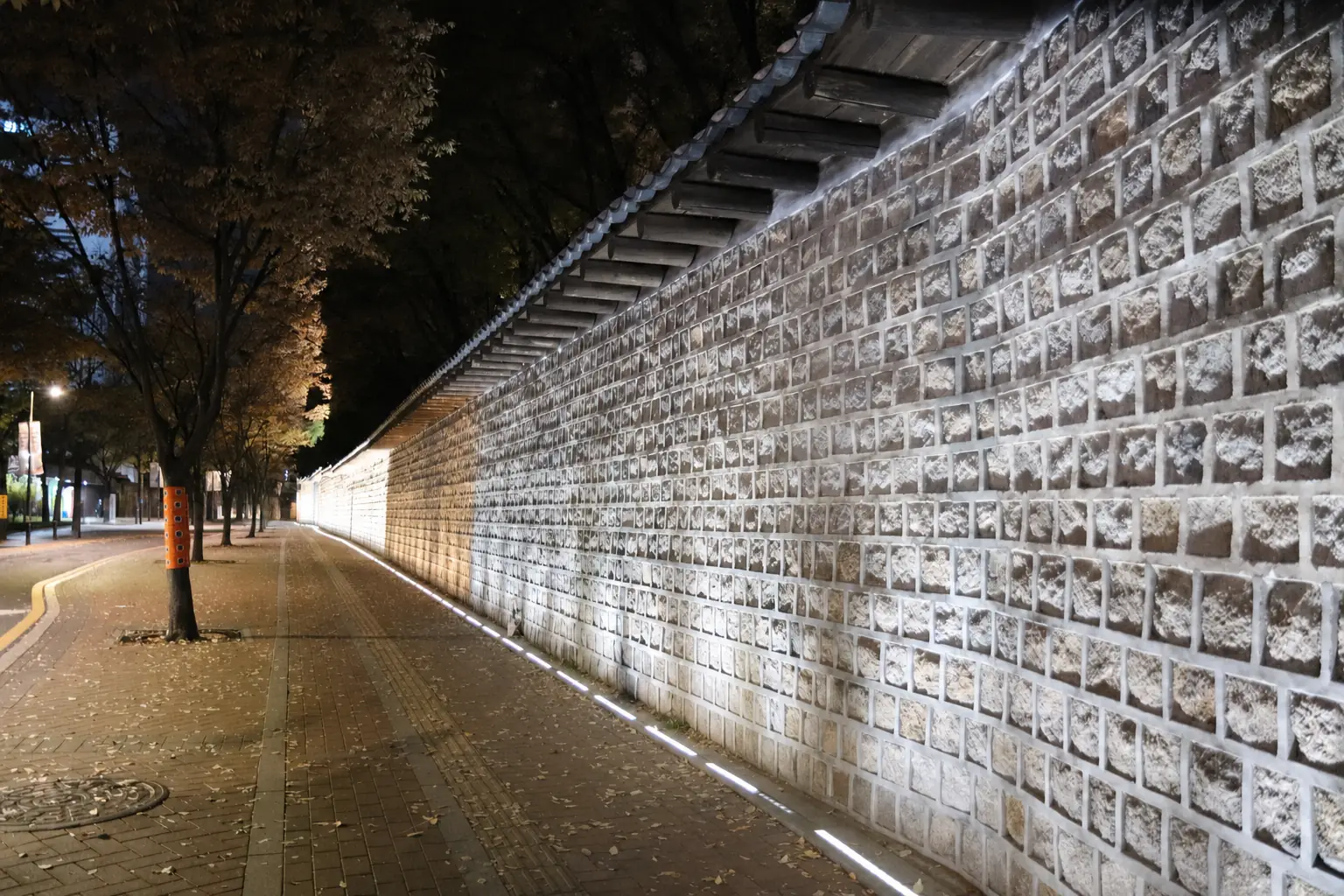
Arrival day is deliberately light. Meet the guide, receive a working transport card and a hand-marked neighbourhood map showing practical landmarks such as the pharmacy, late-opening shop and a quiet route back to the hotel. Then walk locally. In the evening, pass the illuminated western wall of Gyeongbokgung on the way to dinner. Four hours after landing, travellers will already have begun learning the neighbourhood on foot.
Two palaces, then straight back to the neighbourhood
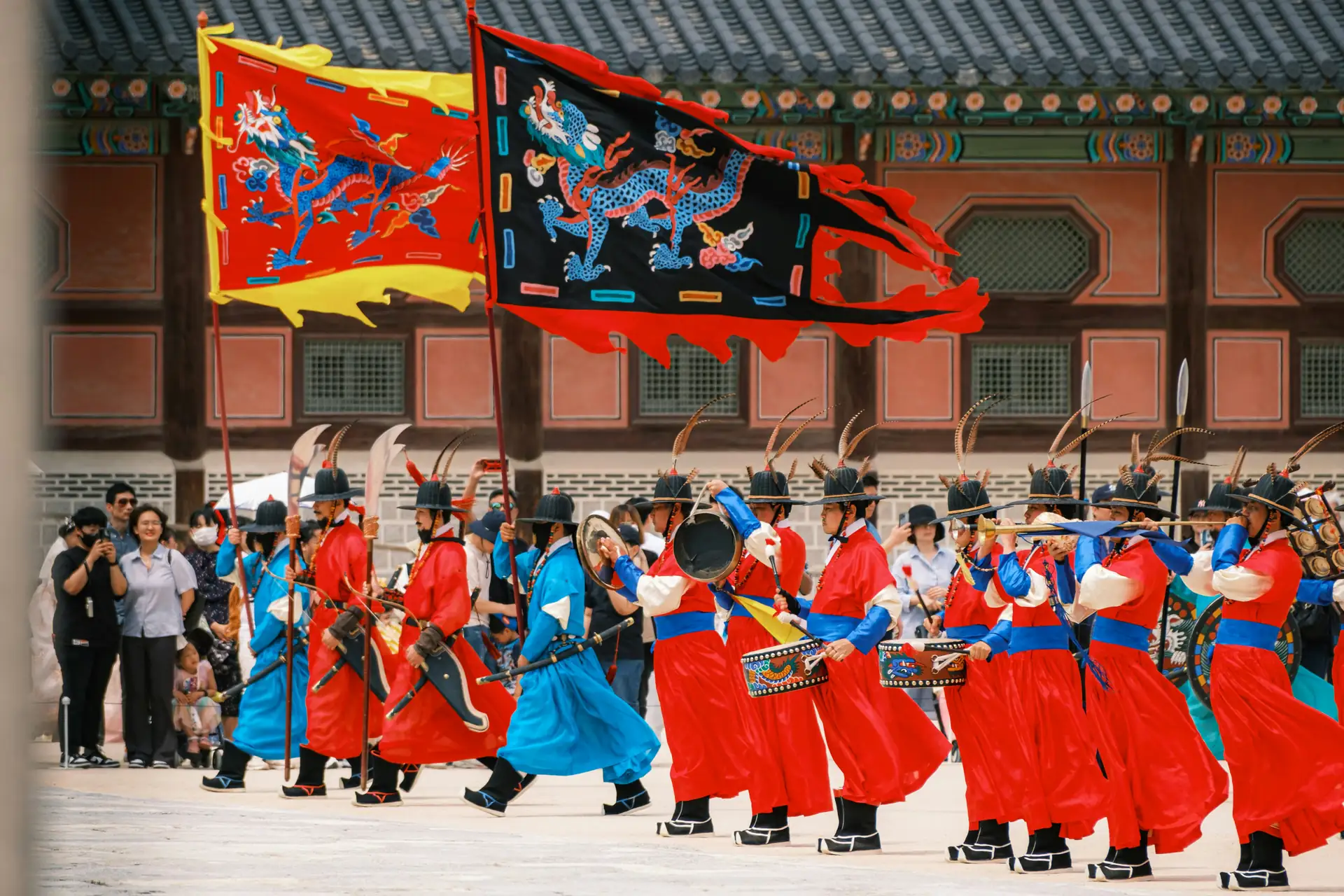
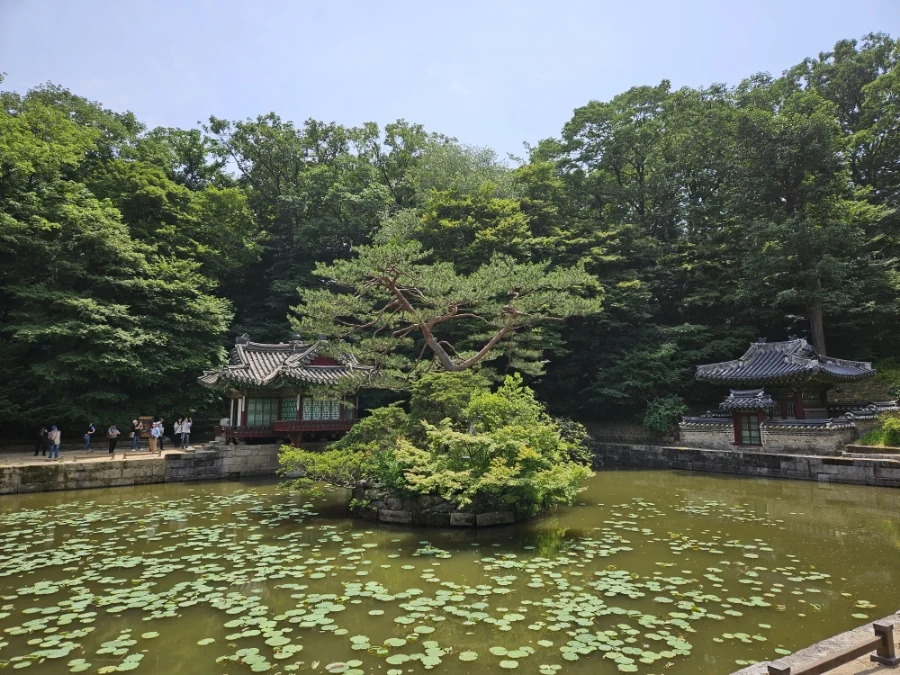
We keep one palace morning because the contrast is worth seeing. Gyeongbokgung presents royal power on a broad ceremonial scale. Changdeokgung offers a different relationship with the landscape: its rear garden follows the existing hills, with pavilions placed within the terrain and entry managed by timed ticket. For travellers familiar with formal European palace landscapes, the contrast is clear. Afterwards, the route returns to Seochon for a market lunch and everyday neighbourhood streets.
Lunch you assemble yourself
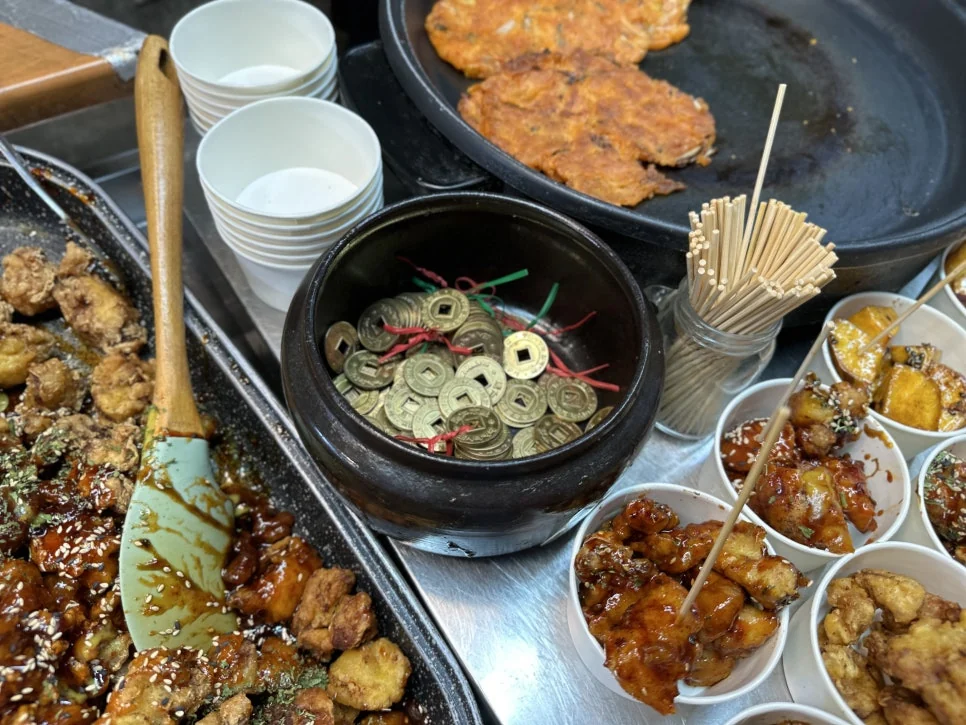
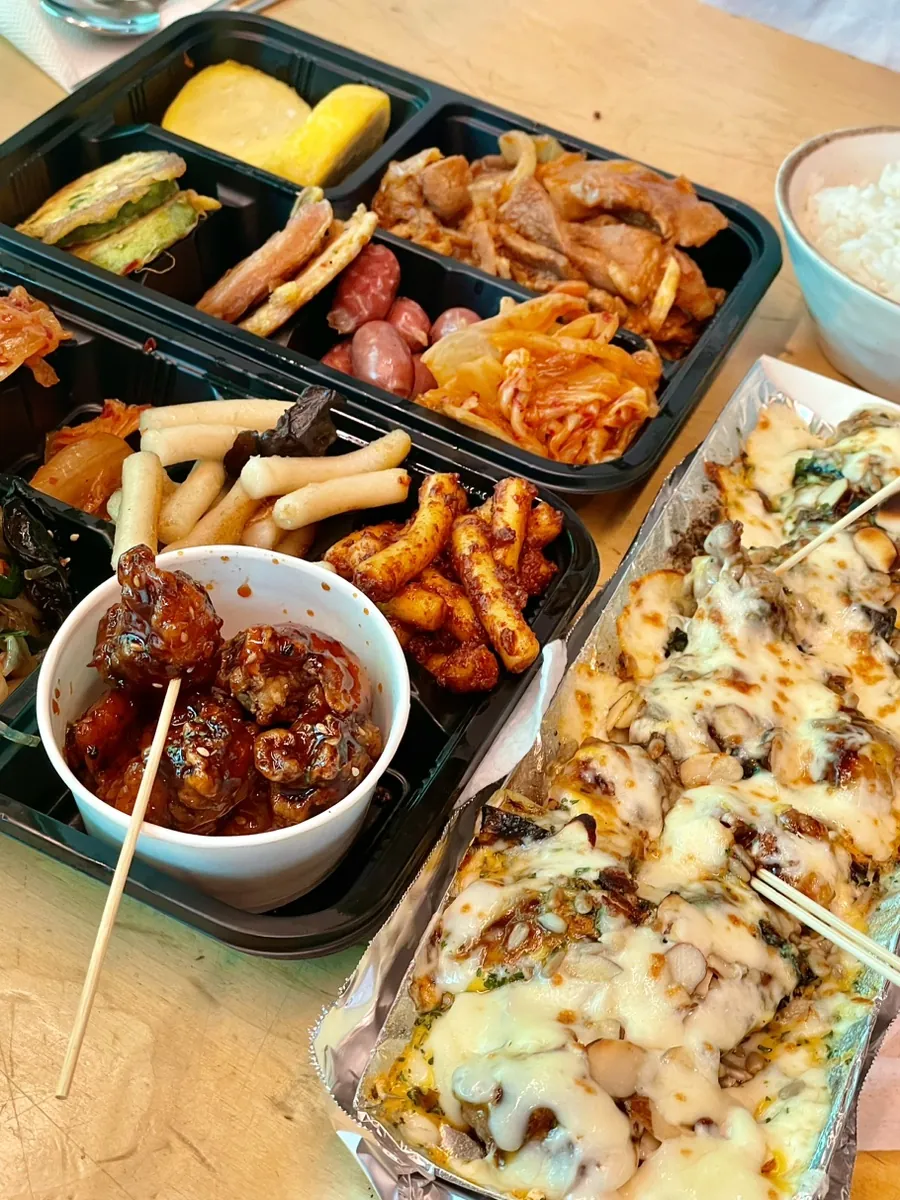
At Tongin Market, exchange cash for brass tokens and fill a lunch tray from participating stalls. The simple mechanism changes the visit from watching the market to making choices within it, dish by dish, before sitting down to eat.
The bathhouse, and the long afternoon after it
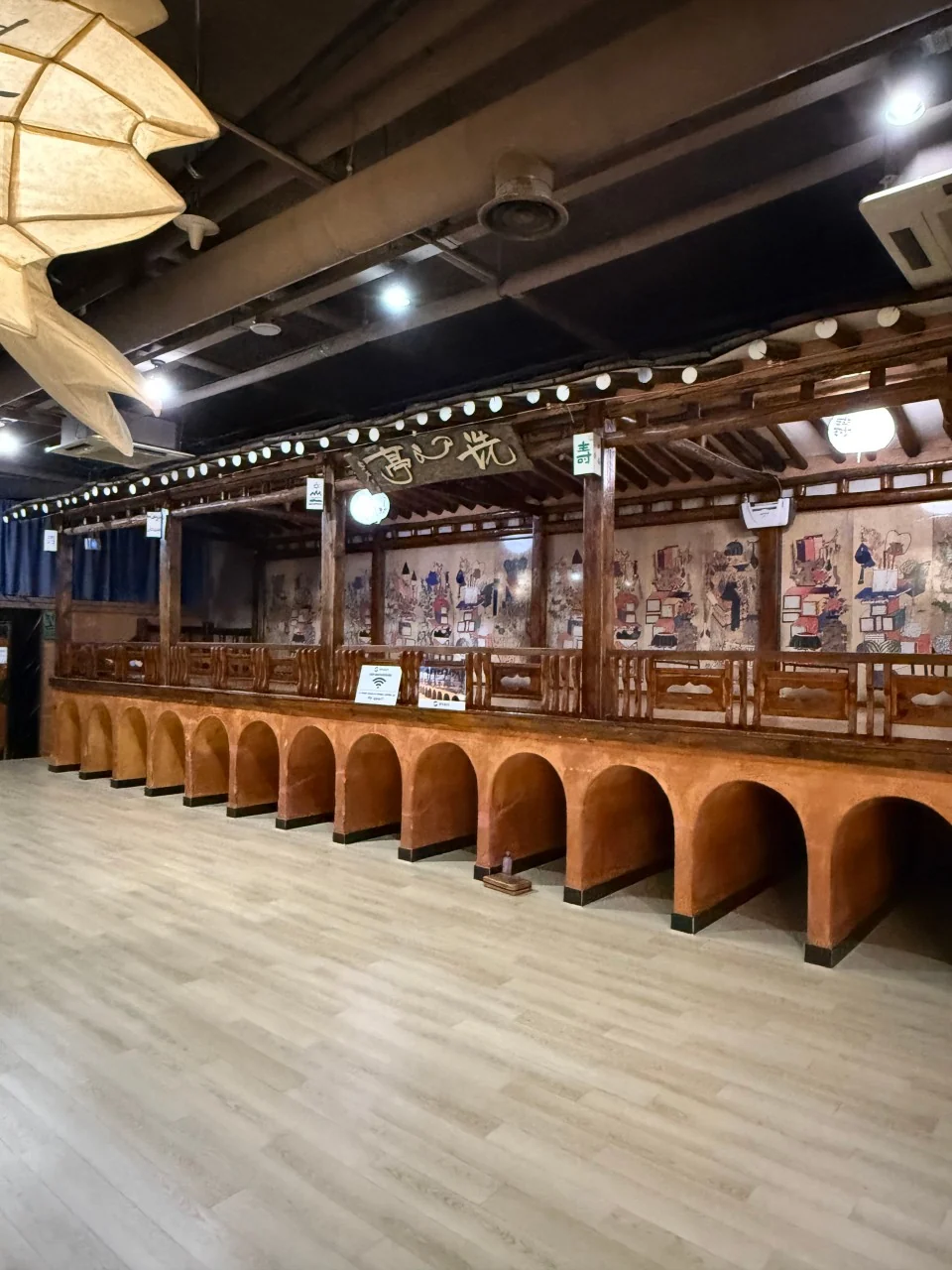
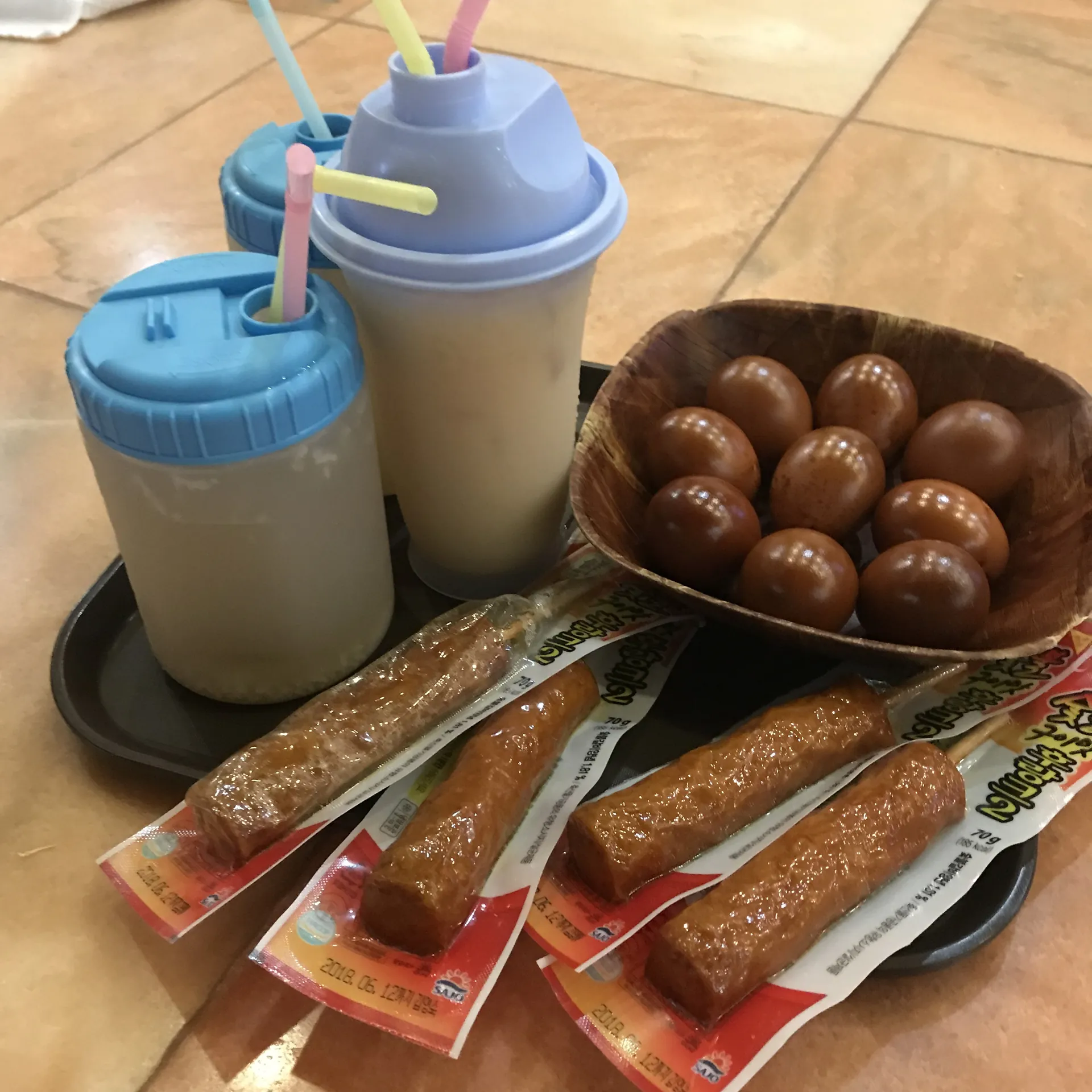
The third morning is centred on a neighbourhood bathhouse: hot pools, a cold plunge and an unhurried scrub. Some elements will feel familiar to European sauna-goers; others — the shared relaxation floors, bathhouse clothes, boiled eggs and long unhurried rest — are distinctly Korean. The afternoon is then left open.
Dinner arrives at the river
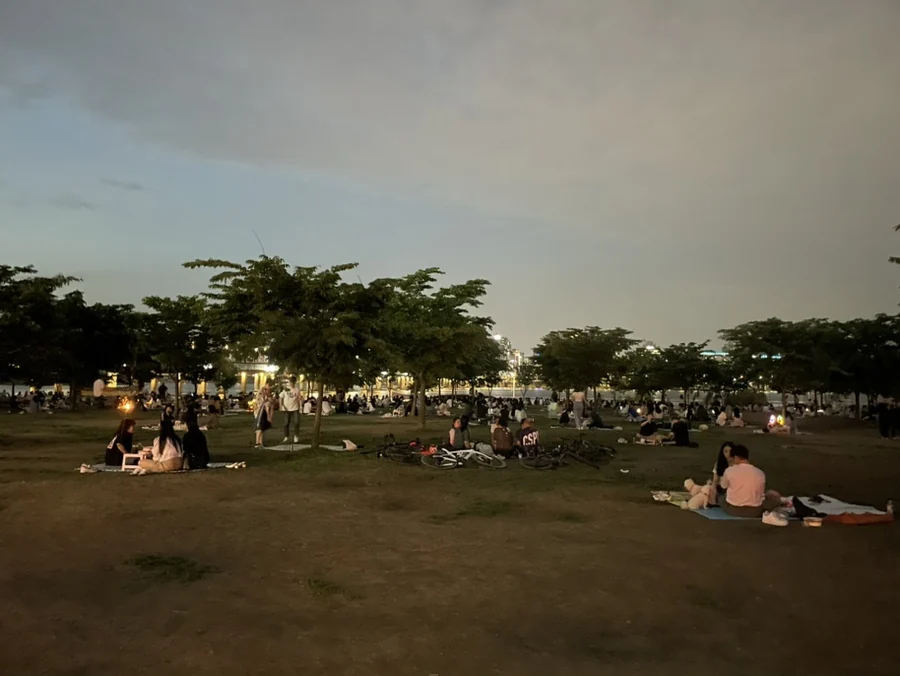
In the evening, sit on the grass by the Han River and have food delivered to the park. Around you are couples on mats, office workers after work and children on bicycles. It is an ordinary warm-evening scene by the river, experienced from ground level rather than from a viewpoint.
The wall you walk, and the last envelope
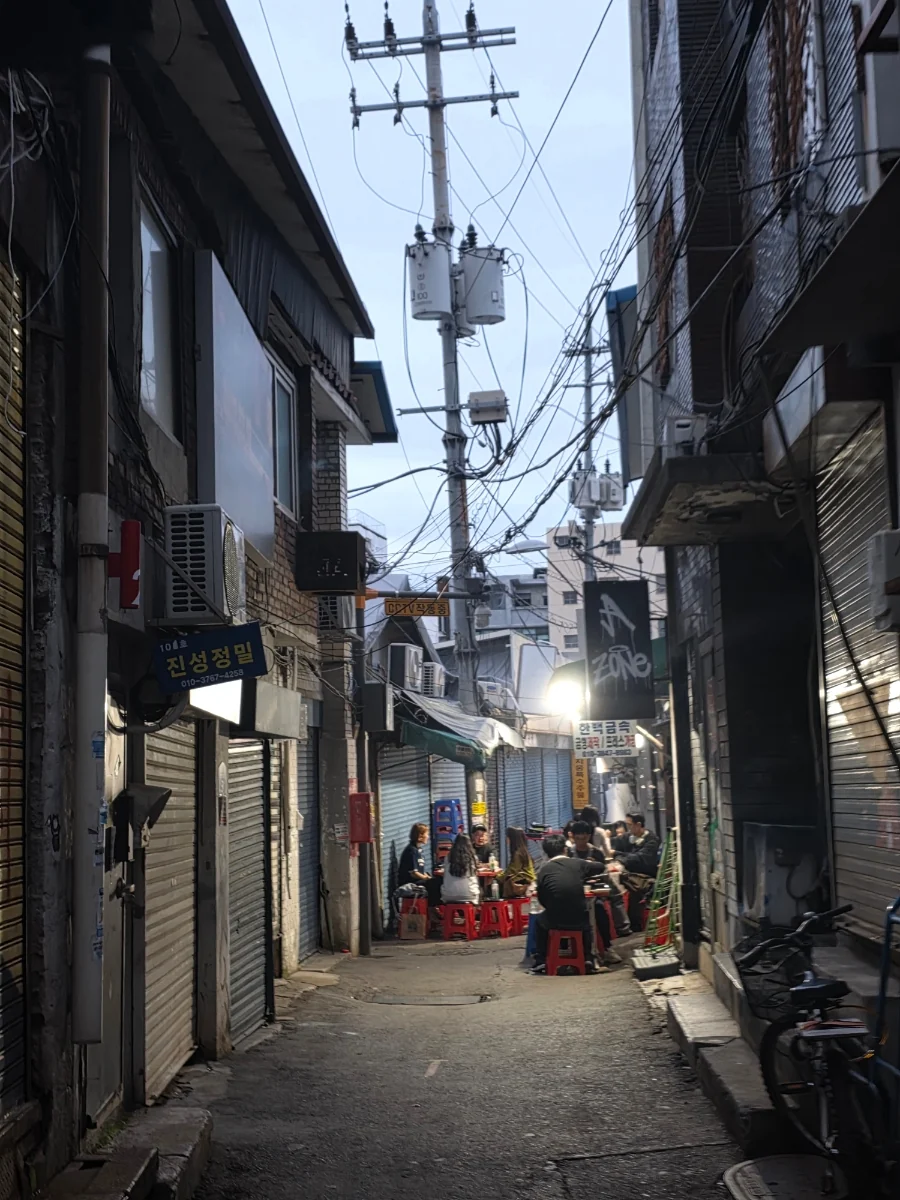
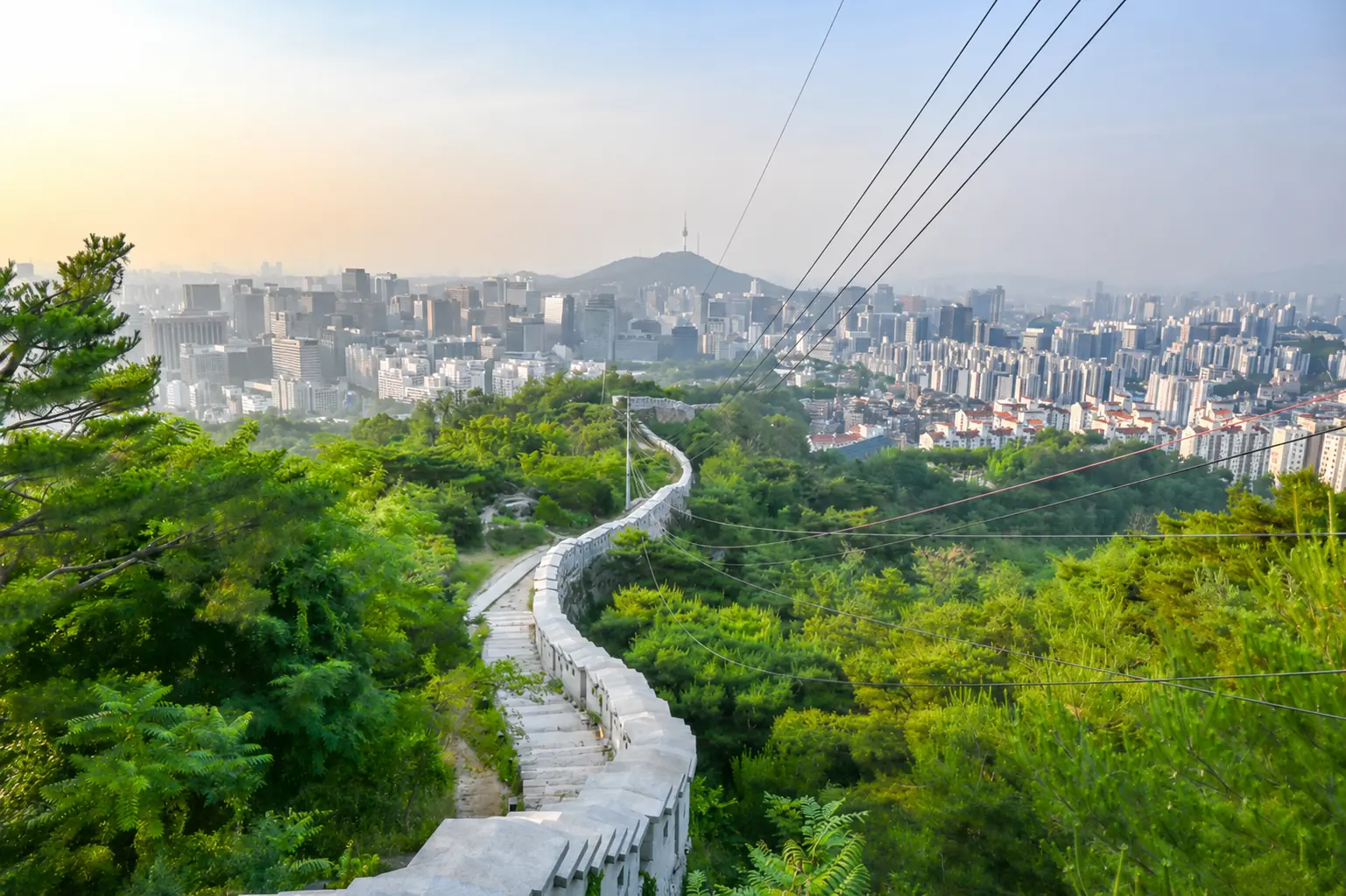
Inwangsan carries a section of the Seoul City Wall, first built in 1396. The programme uses a gentle route with two points where travellers can turn back. Higher up, the palace district, the neighbourhood and the Han River come into the same view. That evening, Euljiro shifts the setting again: print shops and tool merchants give way after dark to plastic stools and steel tables, with pajeon and makgeolli served in the alley. The hand-marked map returns to the table for one final line before it is sealed for the journey home.